CoinYearValue
1968: mint marks return, and move to the front
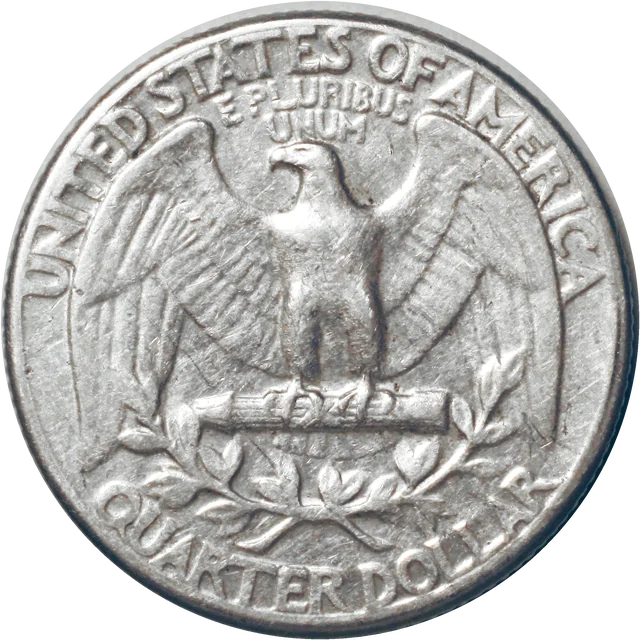
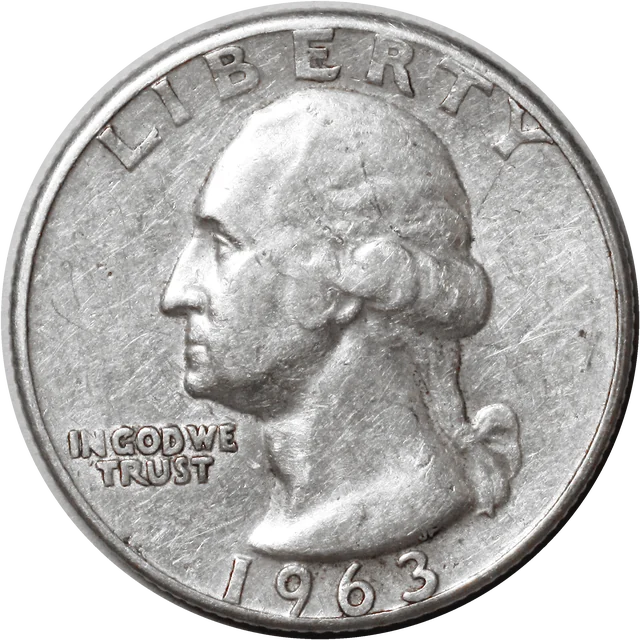
After three years without them, mint marks came back on quarters in 1968, and they landed in a new spot. Instead of sitting on the reverse below the wreath as they had through 1964, the D now went on the obverse, to the right of Washington's ponytail. Philadelphia kept leaving its coins unmarked.
Proof coinage returned the same year, after a gap since the 1964 sets. The work moved to San Francisco, which from 1968 struck quarters mainly for collectors. The 3,041,506 proof quarters from that year all carry an S, the first S-marked quarters since 1954. NGC columnist David Lange describes the return of proofs and mint marks in 1968 as the end of a numismatic winter.
Denver struck 101,534,000 quarters in 1968. That sounds like a lot, but it is the lowest mintage of any clad eagle-reverse quarter struck for circulation from 1965 through 1998. It is still easy to find and occasionally still turns up in change. PCGS estimates roughly 200 to 300 exist in MS67, and fewer than a dozen reach MS68, with none graded finer.
Philadelphia's 220,731,500 coins follow a similar curve. MS66 examples are around for a modest premium, MS67 pieces are hard to find, and fewer than a handful are known at MS68. Heritage sold one of those MS68 coins for $9,400 in September 2013.
What to check on this one
- Look on the front, right of the ponytail, for a D; a 1968 quarter with a letter on the reverse is not genuine.
- An S mint mark on a 1968 quarter means it came from a proof set; expect a mirror background behind a frosted portrait.
- For uncirculated pieces, examine the cheek and the eagle's breast for marks; clean surfaces are what move a 1968 from MS65 into the scarce MS67 range.
Sources: Washington quarter (Wikipedia); USA Coin Album: The US Mint Coins Dated 1964, Part 1 (NGC); 1968-D 25C (Regular Strike), PCGS CoinFacts; 1968 25C (Regular Strike), PCGS CoinFacts; Washington Quarter Mintage (washingtonquarters.org).