 CoinYearValue
Where to sell old coins, and what each buyer takes
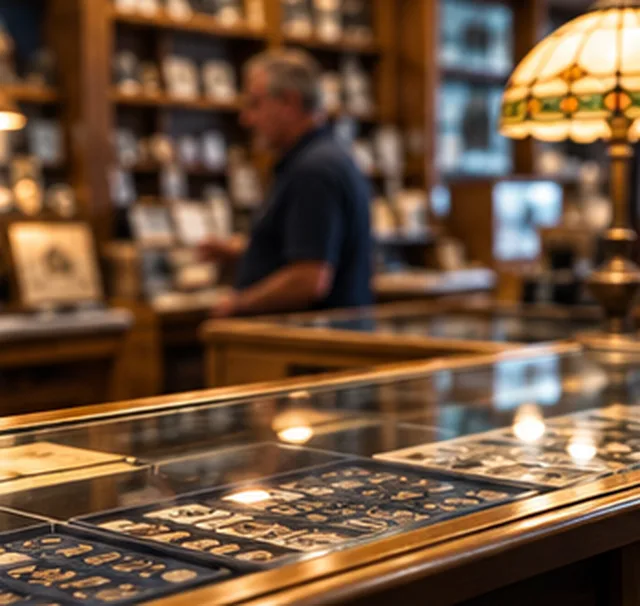
The right place to sell depends almost entirely on what you have. A coffee can of worn 1960s dimes is a silver sale, and any coin shop will buy it at a price tied to the day's silver price. One scarce coin in nice condition is a collector sale, and it can bring several times more in front of the right buyers. Selling one kind of coin through the channel meant for the other is how most people leave money on the table.
Sort before you sell. Pull out anything silver (the silver guide covers dates and weights), look up the dates and mint marks on the year pages, and set aside anything that looks better than the rest. Then use the comparison below.
What each place takes
| Where | How you pay for it | Best for |
|---|---|---|
| Coin shop | The dealer's margin between buy and resale price | Silver coins, common dates, quick cash |
| Pawn shop | A wider margin; loans carry interest set under state rules | Emergency cash when no coin shop is near |
| Coin show | Dealer margin, but many dealers compete at one table row | Getting several offers in one afternoon |
| Online dealer (mail-in) | Dealer margin plus your insured shipping | Bullion and common coins if you live far from a shop |
| eBay | 13.25% of the total sale (up to $7,500) plus $0.30 or $0.40 per order | Mid-value coins with a clear market |
| Auction house | Seller terms set in the consignment agreement; buyers pay a premium | Rare or high-grade coins and large collections |
| Apps and marketplaces | Varies by platform | Identification help, not pricing |
Coin shops
A local coin shop is the fastest and simplest sale. You walk in, the dealer looks the coins over, and you leave with cash or a check. For silver coins, the offer should track the melt value, which you can work out ahead of time with the melt value calculator. A dealer has to resell what he buys at a markup to stay open, so expect his offer to sit below retail. The ANA's reprint of Doug Winter's collecting rules calls coins a poor short-term investment for exactly this reason, and the same gap shows up when you sell.
To find a shop, the American Numismatic Association runs a searchable directory of thousands of member dealers, filtered by location and specialty. A dealer who lists your type of coin as a specialty is more likely to recognize a better date or variety.
Pawn shops
A pawn shop can lend against your coins or buy them outright. The loan amount is based on what the shop thinks it can resell the item for, somewhere between wholesale and its own retail price, and most shops will negotiate. Interest rates and loan terms are set under state law, so ask for both in writing. Ask whether anyone there specializes in coins. If not, use the pawn shop for plain silver at most, and take anything collectible elsewhere.
Coin shows
A show puts many dealers in one room, and that competition is the best tool a seller has. Walk the floor, show the same coins to three or four dealers, and note each offer. Local coin clubs are a good way to hear about nearby shows, and the ANA keeps a club directory. The big national shows, such as the ANA World's Fair of Money (August 10 to 14, 2027, in Rosemont, Illinois) and the National Money Show, draw hundreds of dealers.
Online dealers and mail-in buyers
Some dealers publish buy prices and accept coins by mail. Get the offer in writing before you ship, ask what happens if they grade or count your coins differently, and ship insured with tracking. Ask how quickly they pay and by what method. This works fine for plain silver, where the price is tied to a public market. It is a weaker choice for a single valuable coin, because the dealer sets the grade after the coin is already in his hands.
eBay and current fees
As of October 2026, eBay charges sellers in Coins & Paper Money a final value fee of 13.25% of the total sale amount up to $7,500 per item, plus 2.35% of any amount above $7,500. Bullion has its own rate: 13.6% up to $7,500, and 7% on items over that. Every order also pays $0.30 if it totals $10 or less, or $0.40 above $10. The total includes the shipping you charge and the sales tax the buyer pays, so the fee is larger than the coin price alone suggests. In most categories you get 250 free listings a month.
A worked example: a coin sells for $40 and you charge $5 shipping. The buyer pays $45 plus, say, $3.60 in tax, for a total of $48.60. eBay takes 13.25% of $48.60, which is $6.44, plus $0.40, for $6.84. Subtract the $5 you actually spend on postage and a padded mailer, and you keep roughly $33.
eBay is the best check of real prices even when you don't sell there. Filter by sold listings, not asking prices; every year page on this site links to recent sold results for that coin.
Auction houses
For a rare coin, a high-grade certified coin or a large collection, a major auction house reaches the most serious buyers. Heritage, for example, offers free auction appraisals and cash advances against consigned coins. The buyer's premium, the percentage the winning bidder pays on top of the hammer price, is published separately for each sale, and seller terms are set in your consignment agreement. Read that agreement closely: the commission, any photography or lot fees, and how long until you're paid. Auctions take time to schedule and settle, so they suit coins worth the wait rather than a jar of silver dimes.
Apps and marketplaces
Coin identification apps can help you figure out what a coin is, but the value they show is an estimate, and nobody is bound to pay it. Before you list on any app-based marketplace, look up its seller fees and its rules for shipping valuable items, then compare the net amount with what a local dealer offers.
How to get a fair offer
- Sort the coins into silver, collectible and face value before anyone else sees them.
- Look up each date and mint mark on its year page, for example the 1964 quarter or a 1921 silver dollar, and write down the worn and uncirculated values.
- Work out melt value for silver coins so you know the floor.
- Don't clean anything. Cleaning lowers collector value; see should you clean old coins.
- Get at least two offers, preferably three. Ask each buyer to price the coins individually, not as one lump sum.
- Sell the silver by weight and the better coins one at a time.
- If a dispute comes up with an ANA member dealer, the ANA offers mediation.
A collection from a relative usually needs more sorting than people expect; the inherited coin collection guide walks through it.
When to grade before selling
Paying for certification only makes sense when the coin's value depends on its grade or on proving it's genuine. For a worn silver quarter worth its melt, grading costs more than it can add. The coin grading guide runs the numbers with current fees.
Questions
What does eBay charge to sell coins?
As of October 2026, 13.25% of the total sale amount up to $7,500 for Coins & Paper Money, plus 2.35% above $7,500, plus $0.30 per order of $10 or less or $0.40 above $10. The total includes shipping and sales tax.
Will a coin shop pay full value?
No. A dealer pays below retail because he has to resell at a markup. For silver coins the offer should be close to melt value, so check that figure before you go.
Is a pawn shop a good place to sell coins?
Usually not for anything collectible. Pawn loans are based on what the shop expects to resell for, and interest is set under state law. A coin shop or show is normally a better choice.
Should I sell coins as a lot or one at a time?
Sell common silver by weight as a lot. Pull out better dates and high-condition coins and price them individually.
Sources
Checked October 19, 2026. See our editorial policy for how we source facts.