 CoinYearValue
Coin grading explained: the 1 to 70 scale and when it pays
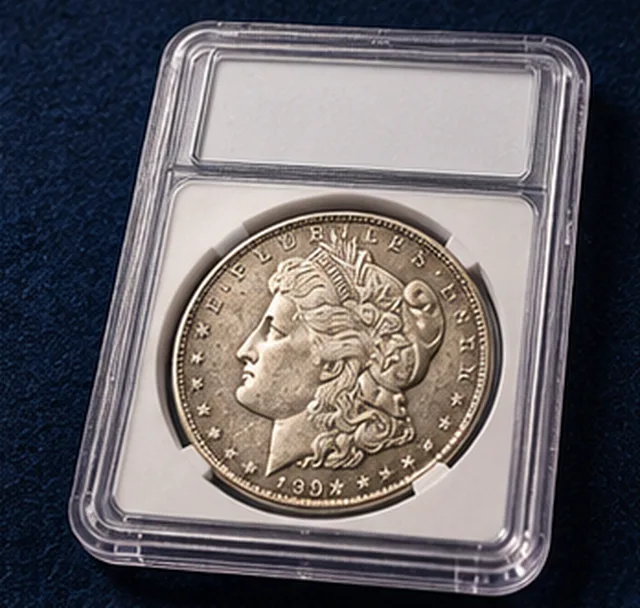
A coin's grade is a number from 1 to 70 that describes how much wear and damage it has. For many coins the number matters as much as the date. A 1921-S Morgan dollar lists at $91 to $131 in plain uncirculated condition and $600 to $1,000 certified MS65. Same coin, same mint, two grade points apart.
Where the 1 to 70 scale came from
William Sheldon devised the scale in the late 1940s for early U.S. large cents. Collectors later applied it to every U.S. series. NGC adopted it when the company opened in 1987 and calls it the industry standard. Not every number is used: below 60, only certain grades are assigned, and 60 is the line where a coin counts as uncirculated.
Grades and what they mean
| Grade | Name | Roughly how much design shows |
|---|---|---|
| PO-1, FR-2, AG-3 | Poor, Fair, About Good | Less than Good |
| G-4, G-6 | Good | About 10% |
| VG-8, VG-10 | Very Good | About 25% |
| F-12, F-15 | Fine | About 50% |
| VF-20 to VF-35 | Very Fine | About 75% |
| XF-40, XF-45 | Extremely Fine | About 90% |
| AU-50 to AU-58 | About Uncirculated | 95% or more, some original luster |
| MS-60 to MS-64 | Mint State (Uncirculated) | Full design with luster |
| MS-65 to MS-70 | Mint State, upper grades | Full design with full luster |
An MS-70 has no post-production flaws visible at 5x magnification. The MS prefix is for coins struck for circulation. Proofs, struck for collectors, get PF on the same 1 to 70 scale. SP, for specimen, covers coins better than a normal strike that don't fully meet the proof standard.
On this site, "worn" means anything below 60, "uncirculated" means about MS-60 to MS-63, and the MS65 column is a certified gem.
Plus grades and designations
Since 2010, PCGS and NGC have added a + to coins at the high end of a grade, from XF45 through MS68. The holder may also carry a strike or surface designation, such as FBL (Full Bell Lines on Franklin halves) or DMPL (deep mirror prooflike on Morgan dollars). Read the whole label as well as the number. Collectors also pay extra for Full Steps on Jefferson nickels, as the 1943 nickel page notes.
PCGS, NGC, ANACS and CAC
Third-party grading means a company with no stake in the sale examines the coin, confirms it is genuine, assigns a grade, and seals it in a numbered plastic holder (a slab). Two or more graders look at each coin, and a finalizer sets the grade. The four largest services, including PCGS, NGC and ANACS, have certified more than 80 million coins between them.
- PCGS (Professional Coin Grading Service) was founded in 1985 by seven dealers and began grading on February 3, 1986. Wikipedia puts its count at about 42.5 million coins, medals and tokens.
- NGC (Numismatic Guaranty Company) was founded in 1987 by John Albanese and is based in Sarasota, Florida. Its certification protects buyers against counterfeits, misattribution and overgrading.
- ANACS (American Numismatic Association Certification Service) posts its prices openly, and collectors can submit directly with its printed form or through a representative at a show.
- CAC does two things: it grades coins into its own CACG holders, and it places a CAC sticker on coins already graded by another service.
PCGS and NGC both price their tiers by the coin's declared value and the turnaround you choose, and both change those tiers from time to time, so check the current schedule on their sites before you fill out a form.
Current fees, as of October 2026
| Tier | Max value per coin | Fee per coin | Turnaround |
|---|---|---|---|
| 2 Day | $10,000 | $99 | 2 business days, not guaranteed |
| 5 Day | $5,000 | $39 | 5 business days, not guaranteed |
| 15 Day | $2,000 | $25 | 15 business days, not guaranteed |
| Economy (no gold) | $500 | $19, 5-coin minimum | Not stated |
| Modern (1964 to date) | $2,000 | $16, 5-coin minimum | Not stated |
ANACS return postage, insurance and handling starts at $29 for 1 to 4 coins worth up to $1,000 total, $36 for 5 to 20 coins, and $42 for 1 to 4 coins worth $1,001 to $5,000.
| Tier | Coins | Max value | Fee per coin |
|---|---|---|---|
| Economy | 1964 and earlier | $300 | $23 |
| Standard | 1964 and earlier | $3,000 | $40 |
| Express | 1964 and earlier | $10,000 | $55 |
| Modern Standard | 1965 to date | $3,000 | $23 |
CAC adds a handling fee of $10 per paper submission or $5 through its online portal. A CAC sticker on a coin already in another company's holder runs $26 in the Economy tier for coins up to $3,000, and coins that don't earn the sticker get 15% off that fee. CAC does not post turnaround times on its pricing page.
When grading pays: three worked examples
A worn 1964 quarter: it doesn't
A circulated 1964 quarter is worth its silver, $10.83 at the time of writing. Even an uncirculated one brings $14 to $21 raw and $25 to $40 as a certified MS65. At ANACS Economy, five coins cost $95 plus $36 return shipping, or $26.20 a coin, before your own postage to send them in. The best possible result barely covers the fee, and a coin that comes back MS63 loses money.
A 1909-S VDB cent: it usually does
A worn 1909-S VDB is worth $800 to $1,400, and at that price a buyer wants proof it is genuine. Authentication is part of what a grading service sells. The ANACS 15 Day tier ($25, up to $2,000) plus $42 return shipping for that value band comes to $67, between 5% and 8% of the coin's value. Sold raw, every buyer has to take your word for it.
An uncirculated 1921-S Morgan: only if you're right about the grade
Raw, an uncirculated 1921-S Morgan is a $91 to $131 coin. Certified MS65, it is $600 to $1,000. At CAC Standard ($40 plus the $10 paper handling fee, plus shipping), you pay about $50 a coin. If it comes back MS65, the gain is several hundred dollars. A grade of MS62 or MS63 leaves it worth about what it was raw, and you are out the fee. Have a dealer or an experienced collector look at it under a lamp before you pay to find out.
The rule that follows from these: grade when the coin is rare enough to be counterfeited, or when the price gap between the likely grade and one grade lower is several times the fee. For common silver, sell by weight.
How to submit
- Pick the tier by your honest estimate of the coin's value, not the value you hope for. CAC, for one, can charge the higher tier's fee when a coin turns out to be worth more than the tier allows.
- Put each coin in its own flip and list it on the form with date, mint mark, denomination and your declared value.
- Add the grading fees, any attribution fees and return shipping, then sign the form.
- Ship by registered, insured mail and double-box the package. ANACS asks you to write the service tier on the outside.
Don't clean a coin before sending it. See should you clean old coins.
Supplies mentioned in this guide
As an Amazon Associate I earn from qualifying purchases. These are paid links. Affiliate disclosure.
Questions
What does MS65 mean?
Mint State 65: an uncirculated coin in the upper part of the Mint State range, with the full design and full luster. It is the grade this site uses for its certified value column.
How much does it cost to grade a coin?
As of October 2026, ANACS charges $16 to $99 per U.S. coin depending on tier, plus return shipping from $29. CAC grading runs $23 to $55 for most coins plus a $5 or $10 handling fee. PCGS and NGC post tiered fees on their sites.
Is PCGS or NGC better?
Both have graded coins since the 1980s and both use the same 1 to 70 scale. For a particular coin, compare recent sold results in each company's holder before you choose.
What is a CAC sticker?
A sticker CAC places on a coin already graded by another company, after reviewing it. As of October 2026 stickering starts at $26 per coin in the Economy tier, and coins that don't earn a sticker get 15% off that fee.
What is the difference between MS and PF?
MS (Mint State) is used for coins struck for circulation. PF (Proof) is used for coins struck for collectors. Both use the same 1 to 70 numbers.
Sources
Checked October 19, 2026. See our editorial policy for how we source facts.