Certified MS65$190Near flawless, graded by PCGS or NGC
Values for the 1909 (no VDB) penny. Other mint marks are in the table below.
A worn 1909 (no VDB) penny sells for about $2–6.
Uncirculated, that coin brings $23–55, and a certified MS65 brings $190. In worn condition, the 1909-S VDB is worth the most: about $690–1,200.
It's worth more than face value even when worn. Compare it with the table, and check the mint mark and the varieties below before selling.
Advertisement
The six days that made the 1909-S VDB
The Lincoln cent went out to the public on August 2, 1909, and by August 6 the Mint had stopped production so the initials VDB could be cut off the reverse dies. Victor David Brenner had first put his whole surname at the bottom of the back; on the coins it was shortened to the initials VDB, and even those drew newspaper complaints that the Treasury was giving a private artist free advertising. Treasury Secretary Franklin MacVeagh objected, and the letters came off.
That short run is why the year splits into four coins. Philadelphia had already struck 27,995,000 VDB cents, so that version is easy to find. San Francisco had made only 484,000, roughly 1.7% of the VDB total, and that small figure is what turned the 1909-S VDB into the key of the series. Demand that first week ran so far ahead of supply that resellers bought cents in bulk and asked 2 to 12 times face for them. On November 2, 1909, the Treasury said every VDB cent had been paid out. Because people put them aside from the start, PCGS estimates about 50,000 1909-S VDB cents survive, around 6,000 of them uncirculated and about 3,000 in MS65 or better.
Such a valuable coin attracts fakes. The usual tricks are gluing an S onto a Philadelphia VDB cent or adding VDB to a 1909-S that never had it. Only four obverse dies struck genuine 1909-S VDB cents, and each placed the S in a slightly different spot, stepping lower and further right from die 1 to die 4. One of those dies also struck plain 1909-S cents, which is why a real S with added initials can fool people.
What to check on this one
Compare the S position with the four known die placements; an S that matches none of them is a red flag.
On a genuine S, the serifs run parallel, and there is often a small raised dot inside the top curve.
Under a loupe the crossbar of the B and the base of the D in VDB should be slightly slanted, not flat, and genuine letters often show strike doubling.
A 1909-S VDB can be a plain 1909-S with initials added, so check the reverse field around VDB for tooling or glue lines.
What each 1909 penny is worth, by grade and mint mark
Grade
VDB
No mark
S VDB
S
GoodGoodG4Heavily worn; date and letters still readable
$6
$2
$690
$75
FineFineF12Worn, but all the main lettering is clear
$9
$3
$1,100
$115
Very FineV. FineVF20Light to moderate wear on the high spots
$12
$6
$1,200
$150
Extremely FineEx. FineEF40Light wear on the highest spots only
$12
$6
$1,350
$150
About UncirculatedAbout Unc.AU50Traces of wear, some original shine
$15
$10
$1,750
$205
UncirculatedUnc.MS60No wear, but plenty of marks
$21
$23
$2,000
$265
Choice UncirculatedChoice Unc.MS63No wear and only a few marks
$62
$55
$2,450
$410
Gem UncirculatedGem Unc.MS65Certified and nearly flawless
$200
$190
$7,300
$1,650
Good through About Uncirculated are for coins as found, not in a grading holder. MS60 and MS63 are uncirculated coins; MS65 is a coin certified by PCGS or NGC. VDB coins have the designer's initials, V.D.B., at the bottom of the back. For cents, MS60 and MS63 values are for brown coins, and red ones bring more. MS65 values are for coins with full original red color; brown and red-brown ones sell for less. Values checked November 15, 2026 against public price guides and auction records. How values work.
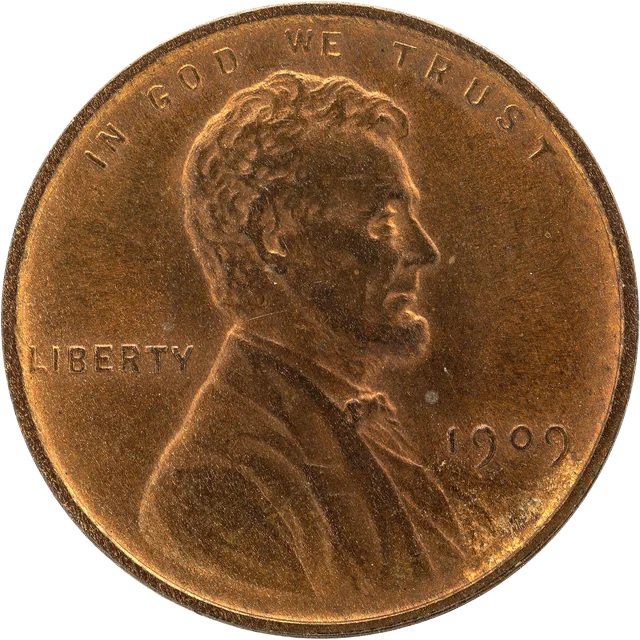
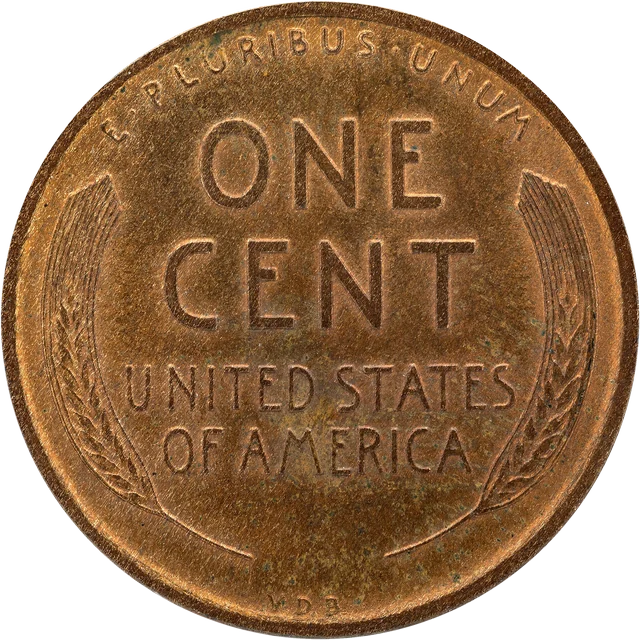
What a 1909 penny looks like
FrontBack
Shown: a 1909 VDB Lincoln wheat cent. Photos: National Numismatic Collection, National Museum of American History (photo by Jaclyn Nash), Public domain, via Wikimedia Commons.
Varieties and errors to check
1909-S VDB
Look for: An S below the date on the front and the letters VDB at the bottom of the back.
Front of the coin, just below the date. Philadelphia cents have no letter, and neither do the 1964 cents struck in San Francisco or the cents struck at West Point from 1974.
What it's made of
Bronze (95% copper, 5% tin and zinc), 3.11 grams, about 4¢ of copper
Melting cents and nickels is not allowed under U.S. Mint rules, so copper and nickel value is a guide only.
Mintage
How many were made
Coin
Type
Mintage
1909 VDB (no mint mark)
For circulation
27,995,000
1909 (no VDB)
For circulation
72,702,618
1909-S VDB
For circulation
484,000
1909-S (no VDB)
For circulation
1,825,000
1909 VDB (no mint mark)
Proof (collector) — vdb
1,194
1909 (no VDB)
Proof (collector) — no vdb
2,352
Questions
Is a 1909 penny silver?
No. 1909 pennies are made of bronze (95% copper, 5% tin and zinc).
Which 1909 penny is worth the most?
In MS65, the 1909-S VDB is worth the most, about $7,300. The 1909-S VDB is the one to look for: typical examples sell for $800–2,000.
Where is the mint mark on a 1909 penny?
Front of the coin, just below the date. Philadelphia cents have no letter, and neither do the 1964 cents struck in San Francisco or the cents struck at West Point from 1974.
As an Amazon Associate I earn from qualifying purchases. As an eBay Partner Network affiliate, we may also earn a commission when you buy through links on this site, at no extra cost to you. Affiliate disclosure.
 CoinYearValue