 CoinYearValue
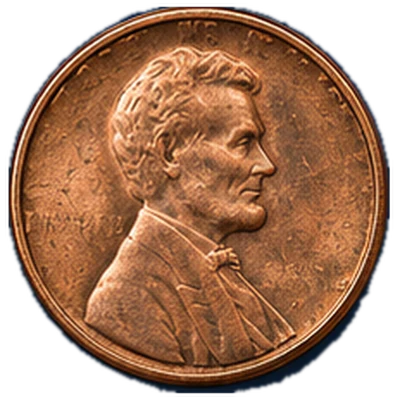
From Brenner's VDB initials to the end of cent production
Lincoln was put on the cent because his 100th birthday fell in February 1909. Victor David Brenner, a Lithuanian-born engraver working in New York, had made a Lincoln plaque in 1907, and that plaque led to conversations with Theodore Roosevelt about a circulating Lincoln coin. A Treasury letter in January 1909 recorded the president's consent, and the cent was picked to carry the portrait, ending a run of Indian Head cents that began in 1859. It was the first circulating U.S. coin to show a real person.
Brenner's initials caused trouble almost at once. The letters V.D.B. sat at the bottom of the reverse between the wheat stalks, and complaints reached Treasury Secretary Franklin MacVeagh, who ordered production stopped on August 5, 1909, three days after the coins were released. Reworking the master hub was expected to take at least two weeks, so officials simply erased the initials. By then San Francisco had struck just 484,000 cents with VDB, the smallest output of any regular Lincoln cent. The initials did not come back until 1918, when they were placed small on Lincoln's shoulder, after MacVeagh had left office and Chief Engraver Charles Barber had died.
War changed the metal twice. Copper went to the war effort in 1943, so cents that year were struck on zinc-coated steel. Some bronze planchets left over from 1942 production ended up in the hoppers and were struck anyway: Coin World counts 15 or more from Philadelphia, 7 from San Francisco and a single 1943-D. Some 1944 cents went the other way and were struck on steel. From 1944 through 1946 the Mint used recycled shell cases, an alloy close to the old bronze but without the tin.
The scarce dates each have their own cause. The 1914-D was struck in far larger numbers than the 1909-S VDB, yet far fewer were saved in mint condition. In 1922 only Denver made cents, 7.16 million of them, and heavy polishing of clashed dies wiped the D off some obverses; the version with a strong reverse is the one collectors treat as the real 1922 plain cent. The 1931-S came in at 866,000. The 1955 doubled die happened at Philadelphia when several presses dumped their output into one box; an inspector pulled the die late that afternoon, but somewhat over 40,000 had been struck and about 24,000 went out mixed with normal cents. Many turned up in the Northeast inside cigarette packs sold from vending machines, which handed back two cents in change under the cellophane. The 1917 and 1936 doubled dies are the other well-known varieties.
Frank Gasparro's Lincoln Memorial reverse replaced the wheat ears in 1959 for Lincoln's 150th birthday. Four special reverses followed in 2009, and the Union Shield, designed by Lyndall Bass and sculpted by Joseph Menna, arrived in 2010. In 2025 the Treasury Secretary suspended cent production for circulation, citing a cost of 3.69 cents to make each one, though the Mint still makes small numbers for collectors.
PCGS describes circulated wheat cents as common and cheap, which matches what most people find in an old jar. Philadelphia cents of the wheat era are usually well made, while Denver and San Francisco pieces were often struck from worn dies and look soft even when they have little wear.
What to check on this one
- A 1914-D should have no initials on Lincoln's shoulder, since they did not return until 1918. A 1914-D with initials there is an altered 1944-D, one of the fakes NGC sees most.
- A 1943 cent that does not stick to a magnet needs authentication. Genuine bronze 1943s are so few that, per Coin World, grading submissions of them already outnumber the coins known to exist.
- On a 1909-S VDB, look closely at the S under the date and the VDB on the reverse rim. NGC calls this the most altered and counterfeited collectible coin, usually by adding one or the other.
- A 1922 cent with no D is worth checking only if the wheat lines on the reverse are sharp; a weak reverse marks one of the less valuable worn-die versions, and some no-D coins are 1922-Ds with the letter scraped off.
Sources: Victor David Brenner & His Lincoln Cent (CoinWeek); Lincoln Wheat Cent, 1909-1958 (CoinWeek); 1943 copper 1-cent resurfaces (Coin World); Jeff Garrett: The Lincoln Cents of 1922 (NGC); The 1955 Doubled Die Lincoln Cent Turns 70 (PCGS); Lincoln Cent (Wheat Reverse) category (PCGS CoinFacts); The Top 50 U.S. Coins of All Time (PCGS); Top 50 Most Commonly Counterfeited U.S. Coins (NGC); Penny FAQs (U.S. Mint).