CoinYearValue
Weak Denver and San Francisco strikes make 1919 Full Bands dimes costly
Dimes were still being struck in large numbers in 1919, and all three mints contributed. Philadelphia's 35,740,000 coins are the easiest to find worn, but a 1919 Philadelphia dime with full original luster and a sharp strike is a different hunt, and one with confirmed Full Bands is genuinely scarce.
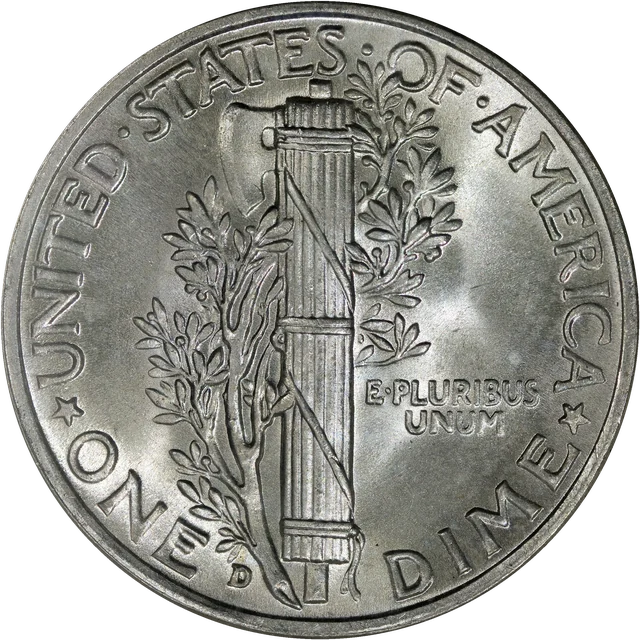
Denver made 9,939,000. Its dimes from this period are notorious for weak center strikes, since the dies seldom brought the bands across the fasces up fully, so a sharp Full Bands 1919-D is one of the hardest Mercury dimes to find. The top example, an MS66 FB, brought $156,000 at Heritage in January 2019. Even circulated 1919-D dimes carry solid premiums over the Philadelphia coin.
San Francisco's 8,850,000 was the smallest mintage of the year, and its strikes were just as inconsistent. Finding a 1919-S with fully separated, crisp bands takes patience, and an MS66 FB sold for $132,000 at Heritage in May 2024.
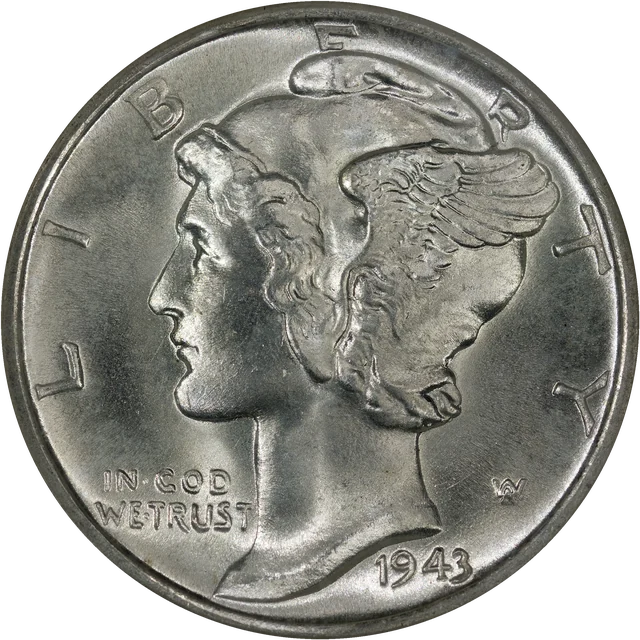
The one listed variety of the year is the 1919 doubled die obverse, FS-101, with its doubling strongest on GOD and TRUST in the motto. Only about 10 are known, all circulated, and an XF40 brought $7,800 at Stack's Bowers in August 2018. Because strike matters so much on this date, a raw coin with sharp bands can be worth far more than a certified one with mushy detail.
What to check on this one
- Look at GOD and TRUST under a loupe for spread or doubled letters; the FS-101 doubled die is the 1919 variety worth hunting for in a pile of raw dimes.
- On a 1919-D or 1919-S, judge the center bands before anything else; on these coins they are usually weak, and sharp bands are where the money is.
- No mint mark means Philadelphia, the easy 1919 in worn grades; a D or S near the bottom of the reverse means a scarcer coin.
Sources: 1919 Mercury dime value (CoinValueChecker); Mercury dime (Wikipedia).