 CoinYearValue
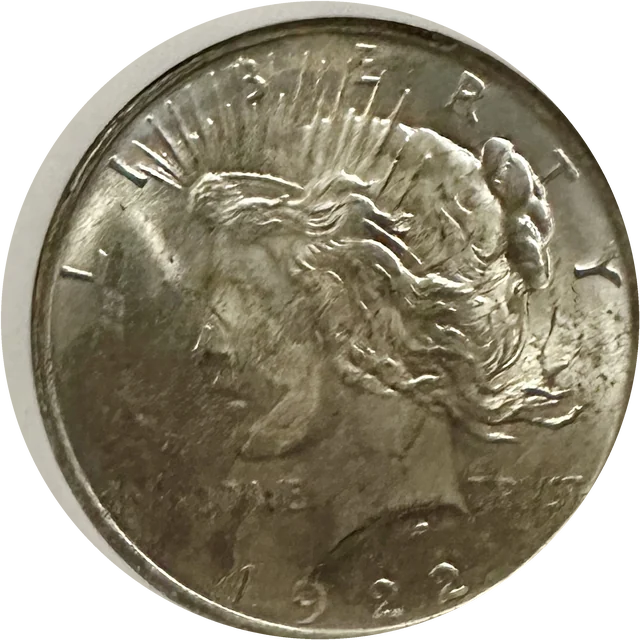
1922: the biggest single-mint silver dollar run ever
Philadelphia reported 51,737,000 Peace dollars in 1922, an all-time record for any United States silver dollar. With Denver and San Francisco added, the three mints turned out 84,275,000 pieces in a single year.
The year began with a false start. About 32,400 more high-relief dollars were struck in early January before production stopped on January 10, because the dies kept breaking. Those coins are believed to have been melted. De Francisci agreed to a flatter version, and low-relief striking began at Philadelphia in early February, at San Francisco on February 13 and at Denver on February 21. The new dies have a flatter field, thinner lettering and different rays in Liberty's crown, and on the back the rock and the sun's rays were reworked.
Commerce never needed that many dollars, so most of them sat in Mint and Treasury vaults in sealed bags of 1,000. The bags were paid out slowly for four decades, with big releases in 1949 and 1950, bags still easy to buy in 1953 and 1954, and the Treasury still handing them out in March 1964. In the 1950s a dealer could often buy a whole bag for $75 to $125 over face value. PCGS estimates around 10,000,000 Philadelphia coins survive today.
San Francisco's 17,475,000 coins are where quality slipped. Ron Guth points to weak centers and poorly defined eagle feathers, and Bowers called the typical piece "an aesthetic disaster." He found MS65 examples at least several times rarer than MS64, while Highfill put the gap closer to 25 times.
What to check on this one
- On a 1922-S, check Liberty's hair just over her ear, then the eagle's feathers. Flat detail there is usually from the strike, and it is the reason most S-mint coins never reach MS65.
- White spots on Philadelphia coins are common for this date; Wayne Miller traced them to problems washing and drying the blanks, and they won't come off.
- Bagmarks are expected on almost every 1922 because the coins spent decades in 1,000-coin bags. Look for a coin whose cheek and field are relatively clean.
Sources: 1922 $1 (Regular Strike), PCGS CoinFacts; Peace dollar, Wikipedia (secondary); 1922-S $1 (Regular Strike), PCGS CoinFacts.
