CoinYearValue
San Francisco's return, and a 1935-D that is tough with Full Bands
San Francisco had struck no dimes in 1932, 1933 or 1934, so the 1935-S marks its return after a three-year gap. All three mints worked in 1935, and as in every year from 1934 to the end of the series, dimes were made in large numbers: 58,830,000 at Philadelphia, 15,840,000 at San Francisco and 10,477,000 at Denver.
The 1935-S is reasonably priced in most grades, and Full Bands examples are easier to find than from Denver because San Francisco generally delivered a cleaner strike on this date. At the very top, supply is thin: an MS68 FB brought $90,000 at Heritage in January 2019, more than five times the Denver record and eight times the Philadelphia record.
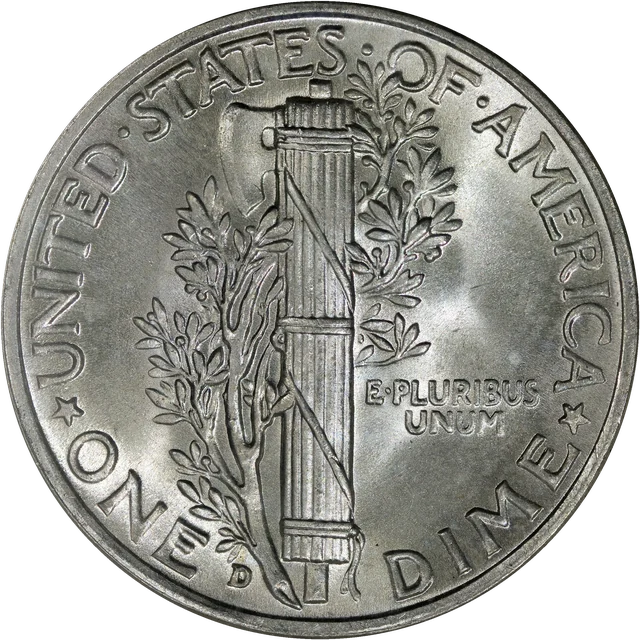
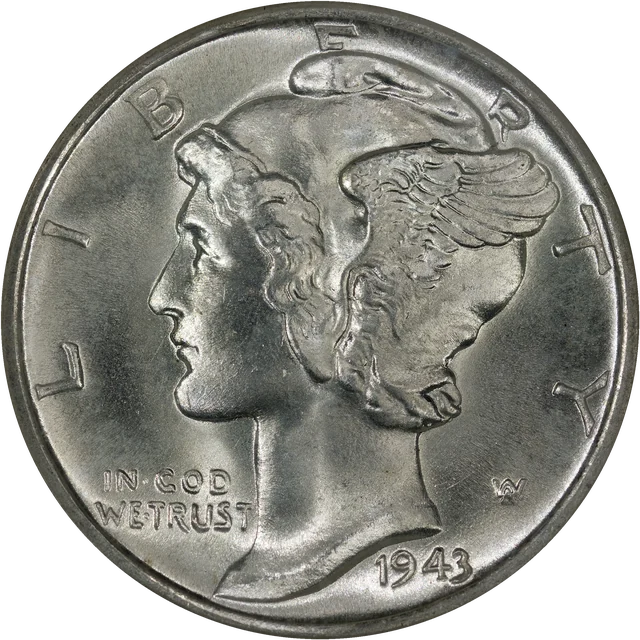
The 1935-D, with the lowest mintage of the year, is considered one of the toughest Full Bands coins in the whole series; some collectors rank it alongside the 1939-S. Even worn ones bring a premium over Philadelphia coins. An MS67 FB sold for $17,250 at Heritage in 2000, and only one MS68 without Full Bands is known, an NGC coin that brought $2,300.
Philadelphia's coin is the cheapest way into the date and easy to find below MS66, though the population thins fast above that. The record is $11,213 for an MS68 FB at Bowers and Merena in 2006. Its main variety is a doubled die obverse, FS-101, with doubling best seen on the date and LIBERTY; CONECA has documented at least two doubled dies for 1935.
What to check on this one
- For the FS-101 doubled die, check the date and LIBERTY at 10x or more; true doubling is rounded and raised, while machine doubling looks flat and shelf-like.
- On a 1935-D, a coin with sharp, fully separated bands deserves a very close look; that combination is rare on this date.
- Grade carefully in high Mint State; on all three 1935 dimes a single grade step near the top can mean a huge jump in price.
Sources: 1935 Mercury dime value (CoinValueChecker); Mercury dime (Wikipedia).