CoinYearValue
Denver's 280 million and the Full Steps problem
Denver struck 280,195,720 nickels in 1962. That was the biggest one-year nickel mintage any U.S. mint had produced up to then, edging past Philadelphia's wartime record of 271,165,000 from 1943. Philadelphia made 97,384,000 for circulation, plus proofs, which were still being sold to collectors in 1962. Denver had crossed 200 million for the first time only the year before, with 229,342,760 in 1961.
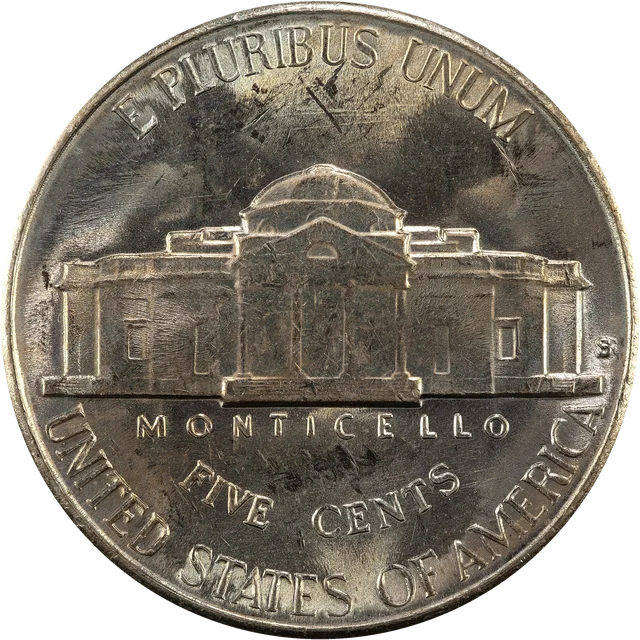
Quality is where the Denver coin falls down. PCGS estimates that only about 30,000 1962-D nickels with Full Steps survive, and just 400 of those reach MS65 or better. PCGS gives it a rarity of R-6.2 at that level, which places it among the 3 rarest coins in its Jefferson series ranking for MS65 and up. No PCGS Full Steps 1962-D has graded above MS65, and an MS65 Full Steps coin sold for $4,320 at Stack's Bowers in November 2025.
The Philadelphia coin is far easier. PCGS estimates about 160,000 Full Steps 1962 nickels exist, about 70,000 of them at MS65 or higher, and the finest are MS67+. One of those, from the Buckeye Collection, brought $21,150 at Heritage in August 2013. That gap between the two mints is the reason the 1962-D carries the higher MS65 price on this page even though Denver made almost 3 times as many coins. The early 1960s were also the peak of a nickel roll-speculation craze centered on the low-mintage 1950-D, a market that fell apart in 1964.
What to check on this one
- On a 1962-D, count the horizontal lines on the steps under a loupe; complete, unbroken lines are rare for this mint and year.
- Make sure the small D is truly there beside Monticello; a weakly struck or worn spot can hide it, and a Philadelphia coin is worth far less in Full Steps grades.
- Look for marks across the step area specifically, since a single scrape there cancels a Full Steps grade.
Sources: United States nickel mintage figures (Wikipedia); Jefferson nickel (Wikipedia); 1962-D 5C, FS (PCGS CoinFacts); 1962 5C, FS (PCGS CoinFacts).