CoinYearValue
Three Earth reverses in one year, and the Type 2 die used by mistake
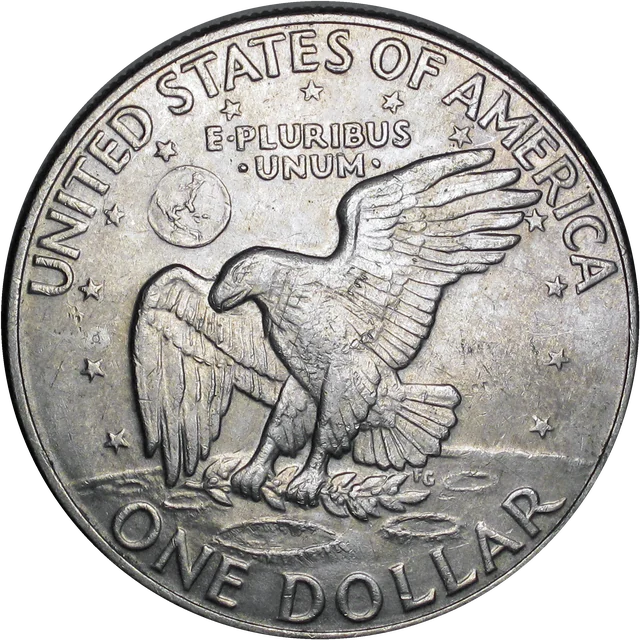
The Earth on the back of a 1972 Ike was drawn three different ways. Type 1 continued the 1971 look, with a somewhat flattened globe and Florida pointing to the southeast. In March 1972 alone, Philadelphia used a reverse made for San Francisco's silver proofs, with a rounder Earth and Florida pointing south; that accident is the Type 2. In September a third version, Type 3, replaced Type 1 and carried on into 1973 and later years.
PCGS says the Type 2 comes from a single known reverse die, so it can only be a Philadelphia coin with no mint mark. How many exist is an open question. Jaime Hernandez estimates fewer than 40,000 in all grades because so many circulated and were lost, while the PCGS survival estimate runs to 500,000 across all grades, with just 500 or so at MS65 and up.
Denver struck 92,548,511 clad dollars in a push to get the Ike into everyday use. Bowers notes that the 1972-D is usually well struck, which is unusual for this series, yet the January 1993 PCGS report showed just 36 at MS65. Many circulated for a while in Western gaming halls before ending up in bank vaults. It was also the last Ike that the government did not sell in mint sets, so few fresh examples were put away. Demand for the silver version fell sharply too, and San Francisco's uncirculated output dropped to 2,193,056.
What to check on this one
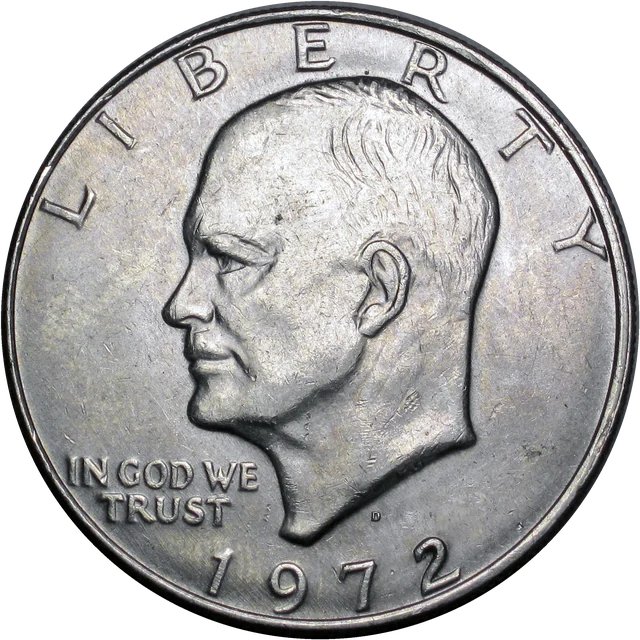
- Only a no-mint-mark 1972 can be a Type 2. If you see a D or S above the date, it is not the variety, whatever the seller says.
- Compare the Earth with reference photos of all three types. On a Type 2 the globe looks round and the islands below Florida are flat and hard to make out.
- A 1972-S in a blue envelope is the 40% silver coin. Clad dollars pulled from circulation show a band of copper color around the rim edge.
Sources: Eisenhower dollar, Wikipedia (secondary); 1972 $1 Type 2 (Regular Strike), PCGS CoinFacts; 1972-D Eisenhower dollar listing, Silver Dollars & Trade Dollars of the United States (Bowers), PCGS.