Certified MS65$22–105Near flawless, graded by PCGS or NGC
A worn 1976 Eisenhower dollar is worth its face value, $1.
Uncirculated ones bring $7–27, and a certified MS65 brings $22–105, depending on the mint mark. The 40% silver S collector coin brings $34 in MS65.
Spend it, unless it looks brand new.
Advertisement
Bicentennial Ikes and the lettering that had to be redone
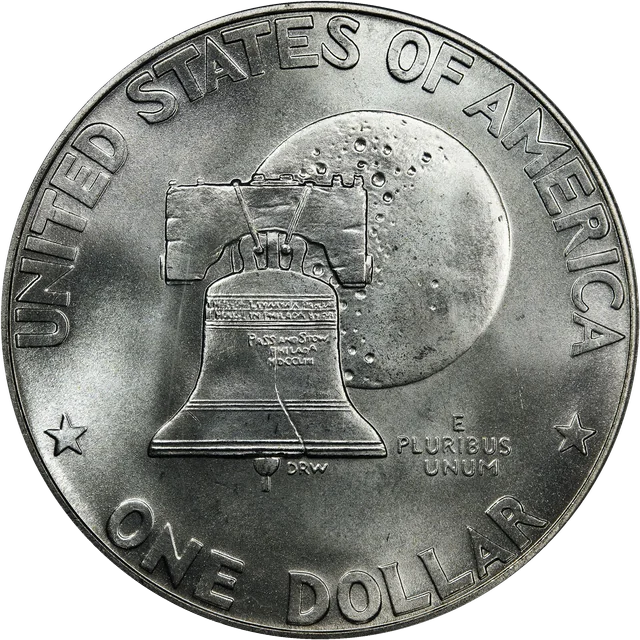
There is no 1975 Eisenhower dollar. According to Bowers, in the spring of 1975 Mint Director Mary Brooks froze the date on quarters, halves and dollars, and coins struck that year and the next carried 1776-1976 instead. The new reverse came from Dennis R. Williams, a 22-year-old art student whose Liberty Bell in front of the Moon was chosen in March 1974. Chief Engraver Frank Gasparro then simplified the lunar features and adjusted the bell and lettering.
The first clad coins struck with that reverse came out indistinct, so production was halted and Gasparro reworked the dies. The result is two types. Type 1 has thick, rounded letters with round O's. Type 2 has narrower, sharper letters with tall, oval O's. Every 40% silver Bicentennial dollar carries the Type 1 reverse.
Philadelphia's Type 2 run of 113,318,000 is the largest of any Ike and the only one over 100 million. Specialist Dave McHenry thought it probably the most common date in the series, with more MS64 and MS65 coins than any other. The Philadelphia Type 1, at 4,019,000, is the scarce one, and that is why it brings the most in the value table. Denver's Type 1 coins have their own problem: McHenry called them the worst struck business-strike Ikes, with softness at the bell and the denomination, so high-grade examples are scarcer than a mintage of 21,048,710 suggests. The dual date drew in people who weren't collectors, and so many of their coins were spent that worn Type 2 Philadelphia pieces are very common.
What to check on this one
Look at the O in ONE DOLLAR on the back with a loupe. Round and thick means Type 1; tall and oval means Type 2.
A no-mint-mark Type 1 is the one to set aside; it is about 1 coin in 29 from Philadelphia that year.
On a 1976-D Type 1, expect soft detail on the Liberty Bell and the denomination; that is the strike, not wear.
What each 1976 Eisenhower dollar is worth, by grade and mint mark
Grade
Type 1
Type 2
D Type 1
D Type 2
S silver
GoodGoodG4Heavily worn; date and letters still readable
$1
$1
$1
$1
$14.97
FineFineF12Worn, but all the main lettering is clear
$1
$1
$1
$1
$14.97
Very FineV. FineVF20Light to moderate wear on the high spots
$1
$1
$1
$1
$14.97
Extremely FineEx. FineEF40Light wear on the highest spots only
$1
$1
$1
$1
$14.97
About UncirculatedAbout Unc.AU50Traces of wear, some original shine
$2.50
$2.50
$2.50
$2.50
$15
UncirculatedUnc.MS60No wear, but plenty of marks
$7
$7
$7
$7
$16
Choice UncirculatedChoice Unc.MS63No wear and only a few marks
$27
$13
$14
$12
$23
Gem UncirculatedGem Unc.MS65Certified and nearly flawless
$105
$25
$28
$22
$34
Good through About Uncirculated are for coins as found, not in a grading holder. MS60 and MS63 are uncirculated coins; MS65 is a coin certified by PCGS or NGC. Type 1 has thick block letters on the back; Type 2 has thinner, sharper letters. The S silver column is the 40% silver coin the Mint sold to collectors; a worn or handled one is worth its silver. Philadelphia and Denver coins are copper-nickel. No value drops below the silver in the coin, and those cells follow the live silver price. Values checked November 15, 2026 against public price guides and auction records. How values work.
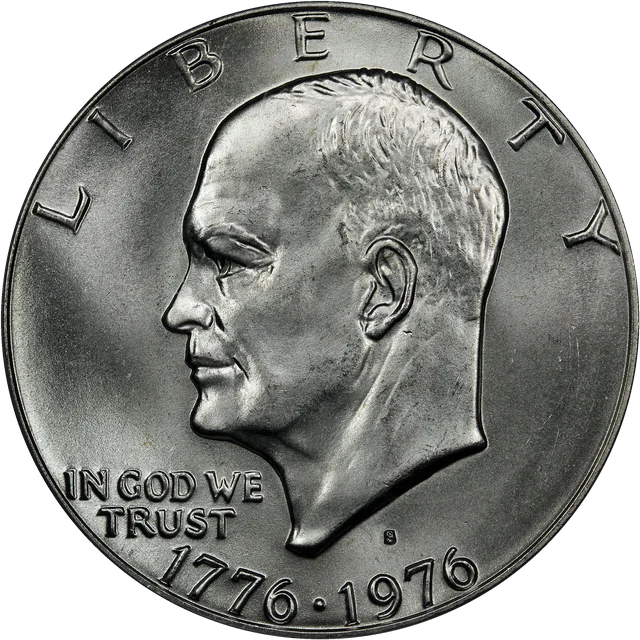
What a 1976 Eisenhower dollar looks like
FrontBack
Shown: a 1976-S silver Eisenhower dollar with the Type 1 back. Photos: Brandon Grossardt, CC BY-SA 3.0, via Wikimedia Commons (front, back).
Varieties and errors to check
Type 1 and Type 2 lettering
Look for: Bold, blocky letters on the back (Type 1) or thinner, sharper letters (Type 2).
Both are common in circulated condition; the difference matters mainly in uncirculated grades.
Front of the coin, above the date, below Eisenhower's neck. Philadelphia coins have no letter.
What it's made of
Copper-nickel clad (outer layers 75% copper, 25% nickel over a pure copper core), 22.68 grams
40% silver overall (silver-clad), 24.59 grams, 0.31625 troy oz of silver, worth $14.97 today
Mintage
How many were made
Coin
Type
Mintage
1976-D, type 1 reverse
For circulation
21,048,710
1976-D, type 2 reverse
For circulation
82,179,564
1976 (no mint mark), type 1 reverse
For circulation
4,019,000
1976 (no mint mark), type 2 reverse
For circulation
113,318,000
1976-S (40% silver)
Collector set, 40% silver
11,000,000
1976-S, type 1 reverse
Proof (collector) — type 1 reverse
2,845,450
1976-S, type 2 reverse
Proof (collector) — type 2 reverse
4,149,730
1976-S
Proof (collector) — silver
4,000,000
Questions
Is a 1976 Eisenhower dollar silver?
Only the 40% silver San Francisco (S) coins sold to collectors in special sets are silver. 1976 coins from circulation are copper-nickel clad, and so is the regular 1976-S proof. Look at the edge: a copper stripe means it is not silver.
Which 1976 Eisenhower dollar is worth the most?
In MS65, the 1976 (no mint mark), type 1 reverse is worth the most, about $105.
Where is the mint mark on a 1976 Eisenhower dollar?
Front of the coin, above the date, below Eisenhower's neck. Philadelphia coins have no letter.
As an Amazon Associate I earn from qualifying purchases. As an eBay Partner Network affiliate, we may also earn a commission when you buy through links on this site, at no extra cost to you. Affiliate disclosure.
 CoinYearValue