CoinYearValue

Home / Lincoln cents

1980 Penny Value

  • Worn5¢Normal wear from circulation
  • Uncirculated5–10¢No wear, MS60 to MS63
  • Certified MS65$13–15Near flawless, graded by PCGS or NGC

A worn 1980 penny sells for about 5¢.

Uncirculated ones bring 5–10¢, and a certified MS65 brings $13–15, depending on the mint mark.

An ordinary one is worth a few cents at most. Check the date and mint mark closely for the varieties below before spending it.

Advertisement

Inflation, billions of cents and an $18,000 error

Inflation pushed interest rates above 15 percent in 1980, squeezing borrowers and savers alike, and the cent carried on in staggering numbers. Philadelphia's official total passed 7.4 billion, a figure that folds in the unmarked cents from San Francisco and West Point, and Denver's 5,140,098,660 was one of its largest runs ever.

Those numbers make an ordinary 1980 worth about 5 cents on this page, and full red coins are easy to find through MS66. They thin out quickly after that. MS67 red Philadelphia coins pass $100, the record is $2,233 for an MS67+ red sold by Heritage in January 2017, and the sole known MS68 carries an estimated value of $8,000.

The most valuable 1980 cent is an error. A 1980-D struck on a 90% silver dime blank, graded NGC MS64, sold at Heritage for $18,000 on August 31, 2025. Regular coins come nowhere near that; a Denver MS67 red brought $1,093 at Heritage in September 2007.

Gold-colored and silver-colored 1980 cents are nearly always altered. The coin is a solid copper alloy, not copper-plated zinc, so nothing can wear through to a different core; plating, chemicals or heat produce the color. Variety collectors look instead for the doubled die obverse described below, or for a lesser-known doubled die reverse with doubling on the Memorial's ceiling between the sixth pair of columns, which like most reverse doubled dies brings a smaller premium.

What to check on this one

  • Weigh any 1980 cent with an odd color. At 3.11 grams it is a normal coin that has been altered, with no collector premium.
  • A genuine off-metal strike shows more than color: a different weight, a different diameter or design cut off at the rim.
  • Check the date and LIBERTY for a raised second image, the sign of the 1980 doubled die obverse.

Sources: 1980 Lincoln Cent Date Guide (CopperCoins); 1980 Penny Value (CoinValueChecker).

Advertisement

Value by grade and mint mark

What each 1980 penny is worth, by grade and mint mark
GradeNo markD
GoodGood G4Heavily worn; date and letters still readable5¢5¢
FineFine F12Worn, but all the main lettering is clear5¢5¢
Very FineV. Fine VF20Light to moderate wear on the high spots5¢5¢
Extremely FineEx. Fine EF40Light wear on the highest spots only5¢5¢
About UncirculatedAbout Unc. AU50Traces of wear, some original shine5¢5¢
UncirculatedUnc. MS60No wear, but plenty of marks5¢5¢
Choice UncirculatedChoice Unc. MS63No wear and only a few marks10¢10¢
Gem UncirculatedGem Unc. MS65Certified and nearly flawless$13$15

Good through About Uncirculated are for coins as found, not in a grading holder. MS60 and MS63 are uncirculated coins; MS65 is a coin certified by PCGS or NGC. The no-mark column includes cents struck at San Francisco and West Point, which carry no mint mark. For cents, MS60 and MS63 values are for brown coins, and red ones bring more. MS65 values are for coins with full original red color; brown and red-brown ones sell for less. Values checked November 16, 2026 against public price guides and auction records. How values work.

What a 1980 penny looks like

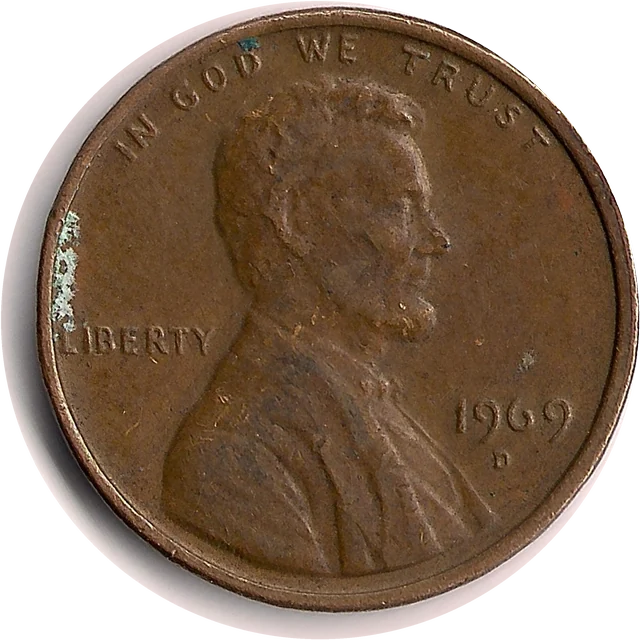
Front of a 1969-D Lincoln cent, the same design
Front

Shown: a 1969-D Lincoln cent, the same design. Photo: Stricklins, CC BY-SA 3.0, via Wikimedia Commons.

Varieties and errors to check

  • 1980 doubled die obverse (FS-101)

    Look for: A clear, raised second image on the date (look at 1980 first) and on LIBERTY, with extra thickness on IN GOD WE TRUST. It is a cent with no mint mark.

    One working die picked up a second, slightly misaligned impression from the hub. Older references list this die as FS-034 and CONECA 1-O-V; the doubling is strong enough to see without magnification.

    Typical value: $150–600 (raw to certified MS65)

    Sources: CoinValueChecker, PriceCharting

Find the mint mark

Front of the coin, just below the date. Philadelphia cents have no letter, and neither do the 1964 cents struck in San Francisco or the cents struck at West Point from 1974.

What it's made of

  • Brass (95% copper, 5% zinc), 3.11 grams, about 4¢ of copper

Melting cents and nickels is not allowed under U.S. Mint rules, so copper and nickel value is a guide only.

Mintage

How many were made
CoinTypeMintage
1980-DFor circulation5,140,098,660
1980 (no mint mark)For circulation4,653,915,000
1980 (no mint mark, made in San Francisco)For circulation1,184,590,000
1980 (no mint mark, made in West Point)For circulation1,576,200,000
1980-SProof (collector)3,554,806

Questions

Is a 1980 penny silver?

No. 1980 pennies are made of brass (95% copper, 5% zinc).

Which 1980 penny is worth the most?

In MS65, the 1980-D is worth the most, about $15. The 1980 doubled die obverse (FS-101) is the one to look for: typical examples sell for $150–600.

Where is the mint mark on a 1980 penny?

Front of the coin, just below the date. Philadelphia cents have no letter, and neither do the 1964 cents struck in San Francisco or the cents struck at West Point from 1974.

Check real sales

Recent sold listings show what coins in your condition actually bring: see sold 1980 pennies on eBay.

Keep it safe: coin holders and a 10x loupe for checking details and mint marks.

As an Amazon Associate I earn from qualifying purchases. As an eBay Partner Network affiliate, we may also earn a commission when you buy through links on this site, at no extra cost to you. Affiliate disclosure.