 CoinYearValue
Home / Lincoln cents / 1999 penny
1999 Wide AM Penny Value
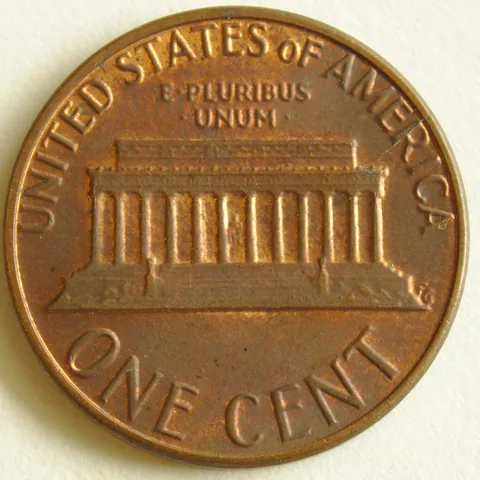
- Worn$25–110Circulated, as found
- Uncirculated$110–180No wear, MS60 to MS63
- Certified MS65$270Full red, graded by PCGS or NGC
A normal 1999 penny is worth one cent. A 1999 Wide AM, struck with the proof-style back on which the A and M of AMERICA stand apart, is worth about $110 uncirculated and $270 in certified MS65 Red. It is found only on cents with no mint mark.
It is the scarcest of the three Wide AM dates from 1998 to 2000, according to Lincoln Cent Resource. CoinValueChecker says PCGS has graded just over 1,000, most of them MS66.
Check every 1999 cent without a mint mark: a loupe and a few seconds are enough.
How to tell a Wide AM from a normal 1999 penny
You need a 5x to 10x loupe and good light. Check the mint mark first, then two spots on the back. Both must agree.
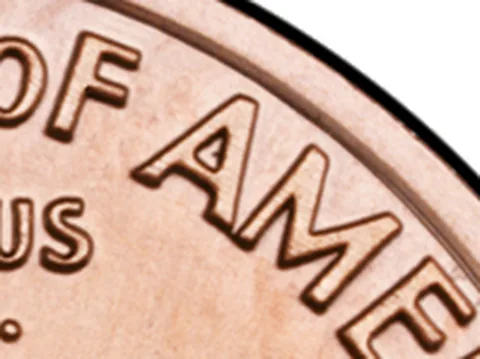
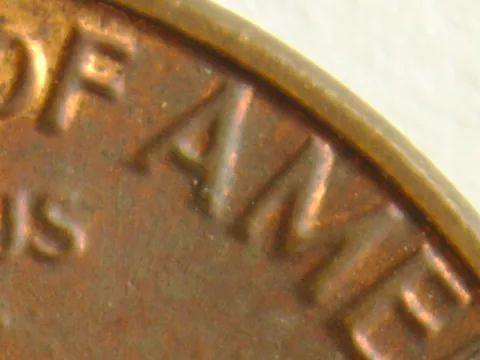
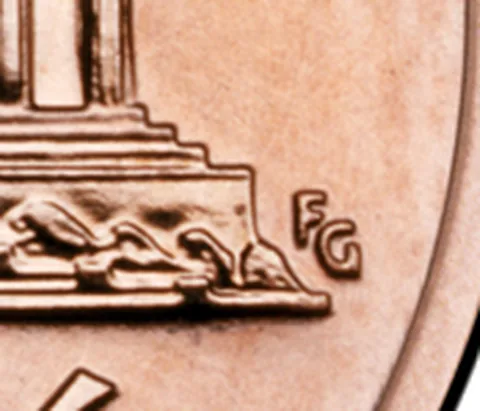
Shown: a 2005-D cent (Close AM) and a 1984 cent (Wide AM). Neither is a 1999 coin; they show the two back designs. Photos: 1984 cent by Slashme, CC BY-SA 3.0, via Wikimedia Commons (cropped); 2005-D cent by the United States Mint, public domain, via Wikimedia Commons (cropped).


- Check for a mint mark. The Wide AM is known only on 1999 cents with no mint mark (Philadelphia). No 1999-D Wide AM has been confirmed, and an S means a proof, which normally has the Wide AM anyway. (CoinValueChecker)
- Look at the A and M in AMERICA. On the Wide AM there is a clear gap between the feet of the A and the M. On a normal 1999 cent they nearly touch. (CoinValueChecker)
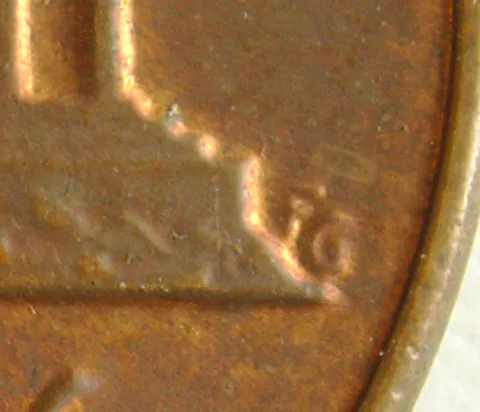
- Check the FG initials. On the Wide AM back the designer's initials sit close to the lower right corner of the Memorial. On the normal Close AM back they stand farther away. (Lincoln Cent Resource)
- Make sure both clues agree. On worn coins and coins from tired dies the letters spread, which can make a small gap appear on a normal coin. A real Wide AM shows the gap and the close FG together. (Lincoln Cent Resource)
- Read the holder. PCGS and NGC label the coin Wide AM, often with FS-901, its Cherrypickers' Guide number. ANACS holders read TYPE 2 REV "PROOF" HUB, sometimes with FS-901 as well. (Lincoln Cent Resource; CoinValueChecker; PriceCharting listings)
What a 1999 Wide AM penny is worth
| Grade | 1999 Wide AM |
|---|---|
| UncirculatedUnc. MS60No wear, but plenty of marks | $110 |
| Choice UncirculatedChoice Unc. MS63No wear and only a few marks | $180 |
| Gem UncirculatedGem Unc. MS65Certified and nearly flawless | $270 |
MS60 and MS63 are uncirculated coins; MS65 is a coin certified by PCGS or NGC. These values come mostly from red-coin price lists, as most uncirculated zinc cents keep their color; brown and red-brown coins sell for less. MS65 values are for full red. Values are the middle of the price guides that list this variety (CoinValueChecker, PriceCharting, CopperCoins), checked November 16, 2026. How values work.
Worn coins. Price guides list few worn sales. On eBay, ungraded coins sold as Wide AM brought mostly $25 to $300 in late 2025 and 2026, with uncirculated ones at the top, and two coins certified AU55 by ANACS sold for $80 and $169 in 2026. (PriceCharting sold listings)
Recent auction results listed by CoinValueChecker: MS64 coins sold for $99 to $186 (2019 to 2022), MS65 for $139 to $162 (2019 to 2023), MS66 for $192 to $288 (2018 to 2022) and MS67 for $660 to $1,293 (2019 to 2022). Certified MS65 coins sold on eBay for about $100 to $475 in 2025 and 2026. (CoinValueChecker; PriceCharting)
The opposite mix-up: 1999-S Close AM proofs
Proofs normally have the Wide AM back. In 2005 collectors found 1999-S proofs struck with the business-strike Close AM back instead, from a die that was apparently processed and used as a proof die by mistake. (Numismatic News)
To spot one, look for an S mint mark, mirror-like fields and an A and M that nearly touch. PCGS attributes them as Close AM, FS-901. Proof 69 Deep Cameo examples have sold for $129 to $552 (2017 to 2023), and the highest price we found is $1,035 for a PR69 Deep Cameo sold by Heritage in December 2008. (CoinValueChecker)
Easy mix-ups
- 1998 and 2000 Wide AMs. The same proof-style back appears on 1998 and 2000 cents. Lincoln Cent Resource ranks the 1999 scarcer than the 1998, with the 2000 the least rare. (Lincoln Cent Resource)
- 1999-D cents. No 1999-D Wide AM has been confirmed. Only coins with no mint mark count. (CoinValueChecker)
- Ordinary 1999-S proofs. A proof with an S mint mark and a Wide AM is the normal proof, not the variety. (CoinValueChecker)
- Worn or late-die Close AMs. Spreading letters can open a small gap on a normal coin. Check the FG initials too. (Lincoln Cent Resource)
- 1995 and 1996 "Wide AM" cents. Both reported coins turned out to be alterations made from two coins. (Numismatic News)
Why some 1999 pennies have a proof back
From 1994 the Mint used the older Wide AM back for proofs and the newer Close AM back for circulating cents, so every 1999 business strike should have the Close AM. (Lincoln Cent Resource)
The 1999 Wide AM was struck when a proof-style back die was used for regular Philadelphia cents. CoinValueChecker calls it an accident. Ken Potter of Numismatic News describes the 2000 Wide AM the same way: a proof-style die that had been processed as a business-strike die by mistake. (CoinValueChecker; Numismatic News)
Nobody noticed for two years. On January 22, 2001, John Wexler reported a 2000 cent with the Wide AM back, and 1998 and 1999 examples turned up soon after; all three dates were known by about mid-2001. (Numismatic News)
Lincoln Cent Resource ranks the seven Wide AM and Close AM varieties from rarest to least rare: 1992 Close AM, 1992-D Close AM, 1998-S Close AM, 1999-S Close AM, 1999 Wide AM, 1998 Wide AM and 2000 Wide AM. Ken Potter put Mint State 1999 Wide AMs at about $500 to $1,000 in 2009 to 2011; today's guides are far lower. (Lincoln Cent Resource; Numismatic News)
Questions
How do I know if my 1999 penny is a Wide AM?
It must have no mint mark. On the back, the A and M of AMERICA have a clear gap at their feet and the FG initials sit close to the Memorial. A normal 1999 has the A and M nearly touching and FG farther away.
What is a 1999 Wide AM penny worth?
About $110 uncirculated (MS60), $180 in MS63 and $270 in certified MS65 Red. The highest price we found is $4,583 for an MS68 in January 2020.
Is there a 1999-D Wide AM?
Not a confirmed one. The variety is known only on Philadelphia cents, which have no mint mark.
What is a 1999-S Close AM proof?
A 1999-S proof struck with the circulating Close AM back instead of the normal proof Wide AM back. It was found in 2005 and is attributed as FS-901.
Why do some 1999 pennies have a Wide AM?
A proof-style back die appears to have been used by mistake for regular Philadelphia cents.
Is the 1999 Wide AM rarer than the 1998 and 2000?
Yes. Lincoln Cent Resource ranks it the scarcest of the three, with the 2000 the least rare.
Sources
Check real sales
Recent sold listings show what coins like yours actually bring: see sold 1999 Wide AM pennies on eBay. Check the photos: many listings use the variety's name for ordinary coins.
To check your own coins: a 10x loupe and coin holders to keep a find safe.
As an Amazon Associate I earn from qualifying purchases. As an eBay Partner Network affiliate, we may also earn a commission when you buy through links on this site, at no extra cost to you. Affiliate disclosure.