Red Seal $2 Bill Value
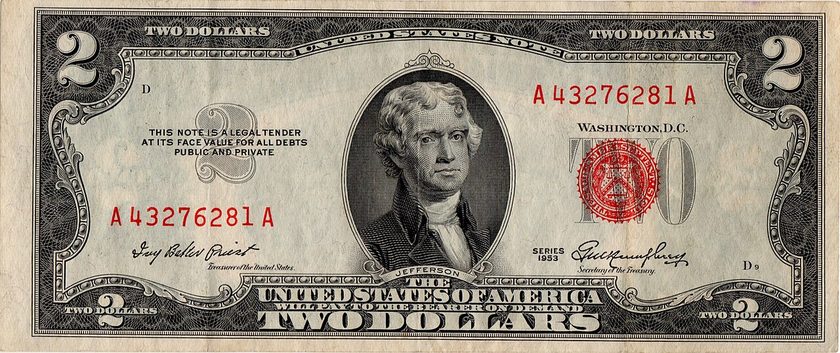
A worn red seal $2 bill is worth about $7 to $25, depending on the series. Uncirculated notes bring $12 to $90.
1953 and 1963 notes are the most common. 1928 notes are worth more, and a 1928B is worth the most.
- Worn$7–25Folds, soft paper, normal wear
- Uncirculated$12–90Crisp, no folds, never spent
- Star note$20–200Star (★) in the serial number
Value by series
| Series | Worn | Uncirculated | Star note |
|---|---|---|---|
| 1928 $2 bill | $12–25 | $50–90 | $75–200 |
| 1953 $2 bill | $7–14 | $13–25 | $20–90 |
| 1963 $2 bill | $7–15 | $12–20 | $20–45 |
How to tell the series apart
- 1928: red seal on the left. Series letters run from A to G; 1928B is the scarce one.
- 1953: red seal on the right, over the gray word TWO. No motto on the back.
- 1963: like 1953, but the back says IN GOD WE TRUST.
Check your serial number
Type the 8 digits of the serial number. Add the letters and the star if your note has them; the checker reads the digits.
Questions
What does a red seal mean?
Red seals mark United States Notes, issued by the Treasury. Green seals mark Federal Reserve Notes, the kind printed today.
Are there red seal $5 and $1 bills too?
Yes. Small-size red seal United States Notes were also issued as $1 (1928 only), $5 and $100 bills.
Is old paper money still legal tender?
Yes. All U.S. paper money issued since 1861 is still legal tender at face value. Collectors usually pay more for older or crisp notes.
Where can I sell it?
For common notes, a local coin or currency dealer is quickest. eBay works for notes worth $20 or more. Send notes worth several hundred dollars to a currency auction house.
Should I get it graded?
Only if it's worth well over $100. Grading by PMG or PCGS Banknote costs tens of dollars per note plus shipping, which is more than most common notes are worth.
Values checked October 9, 2026 against recent sold listings. They are typical prices, not offers. Worn modern notes are valued at face, since that is what a bank or store gives you. How values work.