Certified MS65$665Near flawless, graded by PCGS or NGC
Values for the 1890 silver dollar with no mint mark. Other mint marks are in the table below.
A worn 1890 silver dollar with no mint mark sells for about $41–52: its silver value plus a collector premium.
Uncirculated, that coin brings $72–110, and a certified MS65 brings $665. In worn condition, the 1890-CC is worth the most: about $135–260.
A worn one with no mint mark is worth at least its silver, and lightly worn coins bring more, so compare it with the table before selling it to a bullion buyer at melt. Check the mint mark before you sell.
Advertisement
The Sherman Act and Carson City's biggest dollar year
On July 14, 1890, Congress passed the Sherman Silver Purchase Act. It ordered the Treasury to buy 4,500,000 troy ounces of silver a month and required the Mint to coin 2,000,000 silver dollars a month until 1891. The four mints together turned out about 38 million Morgan dollars in 1890.
Carson City's 2,309,041 is the largest mintage of any CC silver dollar. Many went into circulation in the 1800s. Leftovers were shipped to San Francisco and to the Treasury in Washington, and San Francisco paid out bags at face value in 1942 and 1943, mostly in Nevada. Steve Ruddel estimated about 50 bags left the Treasury Building in 1955. By 1964 only 3,949 remained for the GSA to sell, so GSA-packaged 1890-CC dollars are uncommon. About 20% of Mint State 1890-CC coins are prooflike, most with deep mirrors, and Steve Ivy dispersed nearly 1,000 of them in 1978. The Redfield hoard reportedly held about two bags.
The tail bar variety comes from a deep scratch in the reverse die. Bowers & Ruddy sold several hundred Mint State tail bars from a small Montana hoard in the 1970s, which is why the variety is still readily available, though most tail bars seen are in low grades. For regular 1890-CC dollars, Bowers estimates only 1,000 to 2,000 reach MS65 or finer. Philadelphia's 1890 is a condition puzzle of its own: PCGS estimates about 1,680,000 survive but only around 1,250 at MS65 or better.
What to check on this one
On an 1890-CC tail bar, follow the raised ridge from the bottom of the eagle's tail down and to the left into the olive leaves.
Only 3,949 1890-CC dollars went through the GSA sales, so an original GSA holder for this date is worth keeping intact.
Tilt an uncirculated 1890-CC for mirrored fields; roughly 1 in 5 are prooflike, though only 2% to 3% of those reach MS65.
What each 1890 silver dollar is worth, by grade and mint mark
Grade
No mark
S
O
CC
GoodGoodG4Heavily worn; date and letters still readable
$41
$41
$41
$135
FineFineF12Worn, but all the main lettering is clear
$45
$45
$45
$190
Very FineV. FineVF20Light to moderate wear on the high spots
$52
$52
$52
$260
Extremely FineEx. FineEF40Light wear on the highest spots only
$61
$61
$61
$270
About UncirculatedAbout Unc.AU50Traces of wear, some original shine
$66
$72
$82
$485
UncirculatedUnc.MS60No wear, but plenty of marks
$72
$86
$110
$815
Choice UncirculatedChoice Unc.MS63No wear and only a few marks
$110
$180
$190
$1,450
Gem UncirculatedGem Unc.MS65Certified and nearly flawless
$665
$810
$1,150
$4,800
Good through About Uncirculated are for coins as found, not in a grading holder. MS60 and MS63 are uncirculated coins; MS65 is a coin certified by PCGS or NGC. No value drops below the silver in the coin, and those cells follow the live silver price. Values checked November 15, 2026 against public price guides and auction records. How values work.
What an 1890 silver dollar looks like
FrontBack
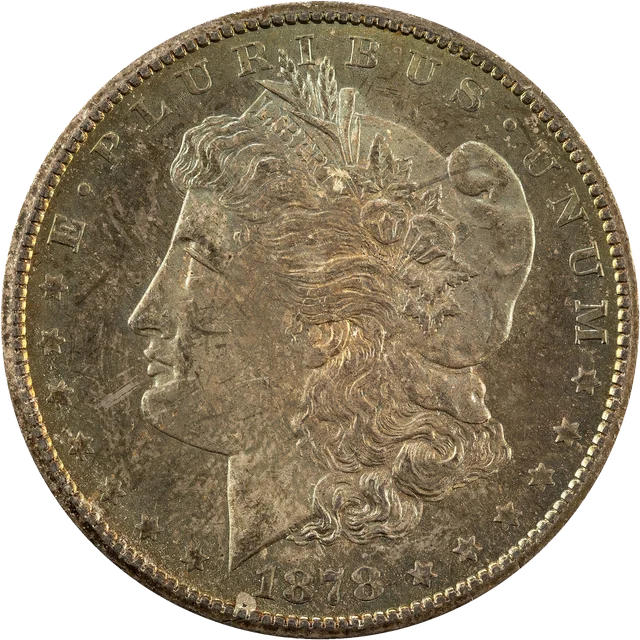
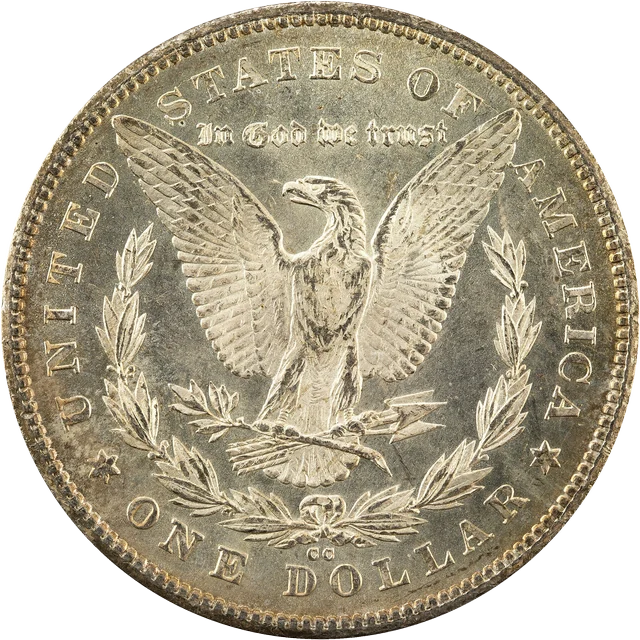
Shown: an 1878-CC Morgan dollar, the same design. Photos: National Numismatic Collection, National Museum of American History (photo by Jaclyn Nash), Public domain, via Wikimedia Commons.
Varieties and errors to check
1890-CC tail bar
Look for: A raised bar of metal under the eagle's tail feathers.
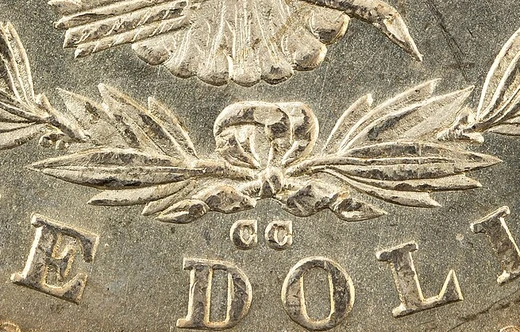
On Morgan dollars the mint mark sits on the back, below the wreath and above the DO in DOLLAR. This 1878 coin shows CC. Photo: National Numismatic Collection, National Museum of American History (photo by Jaclyn Nash), Public domain, via Wikimedia Commons.
Back of the coin, below the wreath, above the letters DO in DOLLAR. Philadelphia coins have no letter. CC is Carson City, O is New Orleans, S is San Francisco and D is Denver (1921 only).
What it's made of
90% silver, 10% copper, 26.73 grams, 0.77344 troy oz of silver, worth $36.62 today
Condition matters
Most Morgan dollars are common; value comes from the mint mark, the year and how much wear the coin has. Carson City (CC) coins sell for more across the board.
Mintage
How many were made
Coin
Type
Mintage
1890-CC
For circulation
2,309,041
1890-O
For circulation
10,701,000
1890 (no mint mark)
For circulation
16,802,000
1890-S
For circulation
8,230,373
Questions
Is an 1890 silver dollar silver?
Yes. Every 1890 silver dollar made for circulation contains 0.77344 troy ounces of silver. Its silver value moves with the silver price; the live figure is shown at the top of this page.
Which 1890 silver dollar is worth the most?
In MS65, the 1890-CC is worth the most, about $4,800. The 1890-CC tail bar is the one to look for: typical examples sell for $275–600.
Where is the mint mark on an 1890 silver dollar?
Back of the coin, below the wreath, above the letters DO in DOLLAR. Philadelphia coins have no letter. CC is Carson City, O is New Orleans, S is San Francisco and D is Denver (1921 only).
As an Amazon Associate I earn from qualifying purchases. As an eBay Partner Network affiliate, we may also earn a commission when you buy through links on this site, at no extra cost to you. Affiliate disclosure.
 CoinYearValue