Certified MS65$1,950Near flawless, graded by PCGS or NGC
Values for the 1891 silver dollar with no mint mark. Other mint marks are in the table below.
A worn 1891 silver dollar with no mint mark sells for about $41–52: its silver value plus a collector premium.
Uncirculated, that coin brings $81–230, and a certified MS65 brings $1,950. In worn condition, the 1891-CC is worth the most: about $150–260.
A worn one with no mint mark is worth at least its silver, and lightly worn coins bring more, so compare it with the table before selling it to a bullion buyer at melt. Check the mint mark before you sell.
Advertisement
Melted trade dollars and the worst-struck Morgan
The Sherman Act's demand for 2,000,000 new dollars a month ran out in 1891, and output fell sharply starting in 1892. Some of the 1891 silver had an unusual source. Mint records show 3,534,616 of the 1891-O dollars were struck from melted trade dollars reclaimed under the Trade Dollar Recoinage Act of 1891, with the rest from metal bought under the Bland-Allison and Sherman acts. Philadelphia used trade dollar silver too, but those coins were mixed in with the rest and can't be told apart.
Bowers calls the 1891-O the worst-struck Morgan dollar of all. Many are close to flat at the centers, and only a few are sharp, even though New Orleans prepared 30 obverse and 29 reverse dies. Uncirculated pieces were never hard to find: there was a big dispersal around 1946 and 1947, more bags from the Treasury Cash Room around 1955 and 1956, and a large release in October 1962. A few million were probably melted under the 1918 Pittman Act.
Philadelphia's 1891 shows how output was tapering off: monthly deliveries fell from 1,600,000 in January to none in December. The Federal Reserve released many bags in 1954 and 1955, and probably a million or more went out through banks in the late 1950s and early 1960s. The date is common in low Mint State grades, but PCGS estimates only about 400 survive at MS65 or better.
What to check on this one
Expect a flat center on an 1891-O. Check Liberty's hair above the ear and the eagle's breast; a sharp strike is a real find for this date.
On a Philadelphia 1891, judge the front and back separately. The two sides often differ in sharpness because so many die pairs were used.
Sharp, frosty uncirculated 1891 Philadelphia coins are scarce; most are poorly struck with below-average luster, which matters at MS64 and up.
What each 1891 silver dollar is worth, by grade and mint mark
Grade
No mark
S
O
CC
GoodGoodG4Heavily worn; date and letters still readable
$41
$41
$41
$150
FineFineF12Worn, but all the main lettering is clear
$45
$45
$45
$220
Very FineV. FineVF20Light to moderate wear on the high spots
$52
$52
$57
$260
Extremely FineEx. FineEF40Light wear on the highest spots only
$61
$61
$72
$320
About UncirculatedAbout Unc.AU50Traces of wear, some original shine
$70
$89
$99
$480
UncirculatedUnc.MS60No wear, but plenty of marks
$81
$130
$250
$730
Choice UncirculatedChoice Unc.MS63No wear and only a few marks
$230
$350
$510
$1,100
Gem UncirculatedGem Unc.MS65Certified and nearly flawless
$1,950
$1,500
$6,100
$4,100
Good through About Uncirculated are for coins as found, not in a grading holder. MS60 and MS63 are uncirculated coins; MS65 is a coin certified by PCGS or NGC. No value drops below the silver in the coin, and those cells follow the live silver price. Values checked November 15, 2026 against public price guides and auction records. How values work.
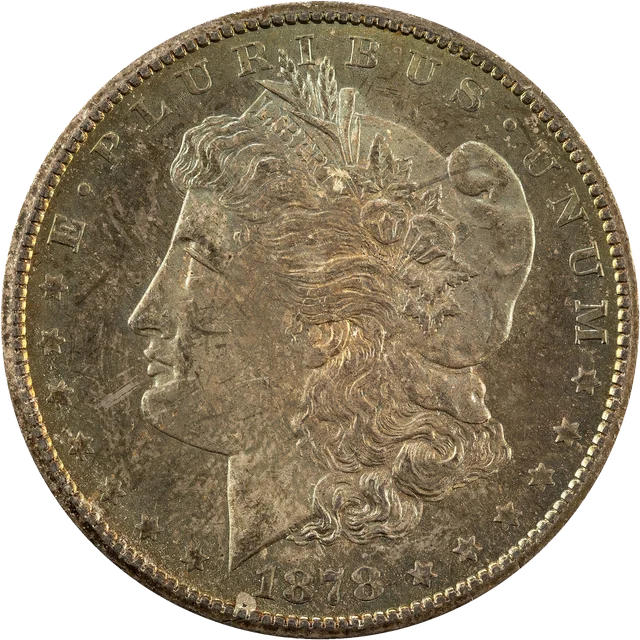
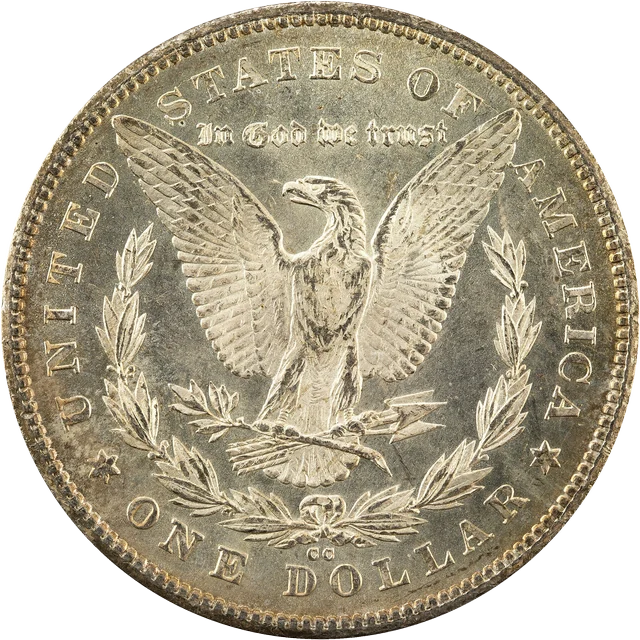
What an 1891 silver dollar looks like
FrontBack
Shown: an 1878-CC Morgan dollar, the same design. Photos: National Numismatic Collection, National Museum of American History (photo by Jaclyn Nash), Public domain, via Wikimedia Commons.
Varieties and errors to check
No major varieties are listed for 1891 silver dollars. Minor errors and die varieties interest specialists, but for ordinary coins condition and mint mark set the value.
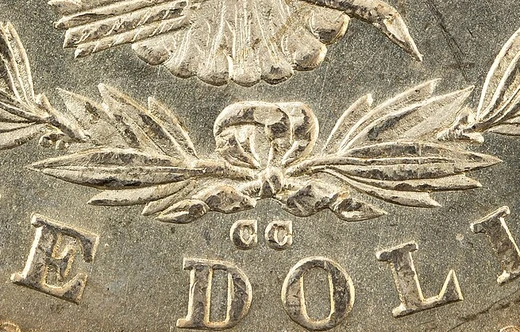
Find the mint mark
On Morgan dollars the mint mark sits on the back, below the wreath and above the DO in DOLLAR. This 1878 coin shows CC. Photo: National Numismatic Collection, National Museum of American History (photo by Jaclyn Nash), Public domain, via Wikimedia Commons.
Back of the coin, below the wreath, above the letters DO in DOLLAR. Philadelphia coins have no letter. CC is Carson City, O is New Orleans, S is San Francisco and D is Denver (1921 only).
What it's made of
90% silver, 10% copper, 26.73 grams, 0.77344 troy oz of silver, worth $36.62 today
Condition matters
Most Morgan dollars are common; value comes from the mint mark, the year and how much wear the coin has. Carson City (CC) coins sell for more across the board.
Mintage
How many were made
Coin
Type
Mintage
1891-CC
For circulation
1,618,000
1891-O
For circulation
7,954,529
1891 (no mint mark)
For circulation
8,693,556
1891-S
For circulation
5,296,000
Questions
Is an 1891 silver dollar silver?
Yes. Every 1891 silver dollar made for circulation contains 0.77344 troy ounces of silver. Its silver value moves with the silver price; the live figure is shown at the top of this page.
Which 1891 silver dollar is worth the most?
In MS65, the 1891-O is worth the most, about $6,100. In worn condition, the 1891-CC is worth the most, about $150–260.
Where is the mint mark on an 1891 silver dollar?
Back of the coin, below the wreath, above the letters DO in DOLLAR. Philadelphia coins have no letter. CC is Carson City, O is New Orleans, S is San Francisco and D is Denver (1921 only).
As an Amazon Associate I earn from qualifying purchases. As an eBay Partner Network affiliate, we may also earn a commission when you buy through links on this site, at no extra cost to you. Affiliate disclosure.
 CoinYearValue