Certified MS65$31Near flawless, graded by PCGS or NGC
Values for the 1939 nickel with no mint mark. Other mint marks are in the table below.
A worn 1939 nickel with no mint mark sells for about 5–10¢.
Uncirculated, that coin brings $4–11, and a certified MS65 brings $31. In worn condition, the 1939-D is worth the most: about $2–5.
A worn one with no mint mark is worth little more than face value. Check the mint mark and the varieties below; uncirculated coins bring more.
Advertisement
The year the Mint fixed Monticello's steps, and Denver's smallest nickel run
Partway through 1939 the Mint decided the reverse it had launched the year before was too soft. The steps of Monticello came out fuzzy, so the engravers recut the hub and sharpened them. That mid-year fix left 1939 with two reverses at every mint: the original, which collectors call the Reverse of 1938, and the sharpened one, the Reverse of 1940. References disagree on which version is scarcer at Philadelphia, so it pays to identify the reverse before pricing a high-grade coin. The difference sits in the step outlines and is easy to miss without a loupe.
Denver struck only 3,514,000 nickels in 1939, the smallest five-cent output that mint had produced since it started making the denomination in 1912. Roll hunters went after it hard during the boom of the 1950s and early 1960s, and uncirculated rolls of 1939-D and 1950-D nickels changed hands for as much as $1,000 apiece before that market cooled in the mid-1960s. Even though the 1950-D had a smaller mintage, the 1939-D is the tougher coin today because far fewer were put away in nice condition.
The Doubled MONTICELLO is a Philadelphia coin struck with the new Reverse of 1940, and the doubling on the building's name can be seen without magnification. PCGS estimates about 60,000 survive and roughly 17,000 grade MS65 or better, but only around 4,000 of all those have Full Steps, and those bring the strongest prices.
What to check on this one
Look at the D or S to the right of Monticello first; a 1939-D in any grade is the coin to set aside.
With a 10x loupe, compare the step lines under the building: crisp, squared edges mean the Reverse of 1940, rounded and blurred edges mean the Reverse of 1938.
On a Philadelphia coin, read MONTICELLO and FIVE CENTS for a second, offset set of letters; real doubling on this variety is bold, not a thin shelf.
What each 1939 nickel is worth, by grade and mint mark
Grade
No mark
D
S
GoodGoodG4Heavily worn; date and letters still readable
5¢
$2
45¢
FineFineF12Worn, but all the main lettering is clear
5¢
$3.50
$1.50
Very FineV. FineVF20Light to moderate wear on the high spots
10¢
$5
$1.50
Extremely FineEx. FineEF40Light wear on the highest spots only
25¢
$7
$2.50
About UncirculatedAbout Unc.AU50Traces of wear, some original shine
$1
$15
$7
UncirculatedUnc.MS60No wear, but plenty of marks
$4
$35
$21
Choice UncirculatedChoice Unc.MS63No wear and only a few marks
$11
$49
$34
Gem UncirculatedGem Unc.MS65Certified and nearly flawless
$31
$83
$56
Good through About Uncirculated are for coins as found, not in a grading holder. MS60 and MS63 are uncirculated coins; MS65 is a coin certified by PCGS or NGC. Values checked November 15, 2026 against public price guides and auction records. How values work.
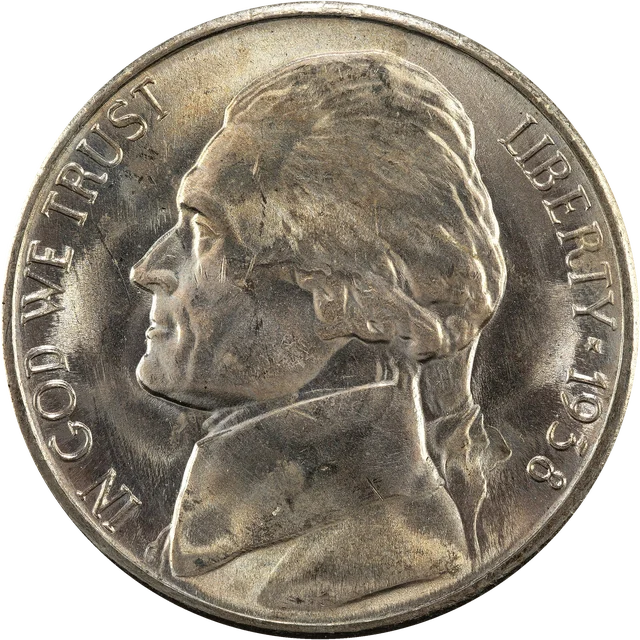
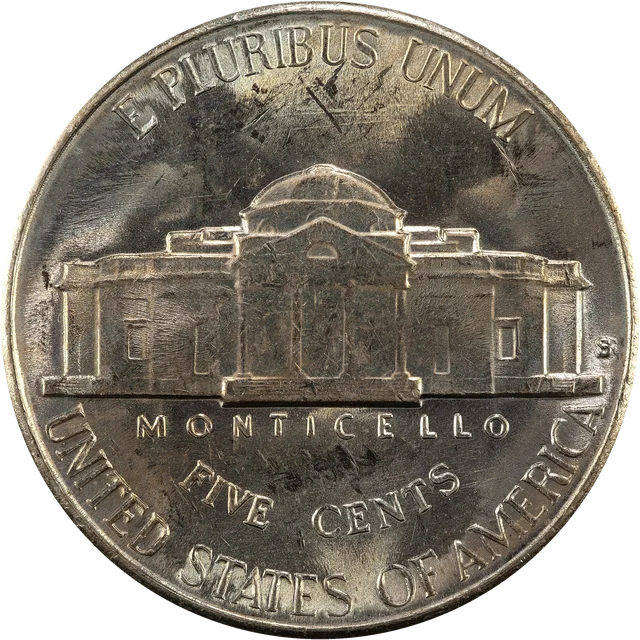
What a 1939 nickel looks like
FrontBack
Shown: a 1938 Jefferson nickel, the same design. Photos: National Numismatic Collection, National Museum of American History (photo by Jaclyn Nash), Public domain, via Wikimedia Commons.
Varieties and errors to check
1939 doubled MONTICELLO nickel (FS-801)
Look for: On the back, MONTICELLO and FIVE CENTS are strongly doubled; the extra letter outlines show under a 5x loupe and on strong coins without one. Philadelphia coins only (no mint mark to the right of Monticello).
A doubled die reverse made when the hub and die were misaligned. It is one of the three major doubled dies in the Jefferson series.
Back of the coin, to the right of Monticello. Philadelphia coins have no letter.
What it's made of
75% copper, 25% nickel, 5.0 grams
Melting cents and nickels is not allowed under U.S. Mint rules, so copper and nickel value is a guide only.
Condition matters
Collectors pay extra when the steps of Monticello on the back are sharply struck (called Full Steps).
Mintage
How many were made
Coin
Type
Mintage
1939-D
For circulation
3,514,000
1939 (no mint mark)
For circulation
120,615,000
1939-S
For circulation
6,630,000
Questions
Is a 1939 nickel silver?
No. 1939 nickels are made of 75% copper, 25% nickel.
Which 1939 nickel is worth the most?
In MS65, the 1939-D is worth the most, about $83. The 1939 doubled MONTICELLO nickel (FS-801) is the one to look for: typical examples sell for $25–780.
Where is the mint mark on a 1939 nickel?
Back of the coin, to the right of Monticello. Philadelphia coins have no letter.
As an Amazon Associate I earn from qualifying purchases. As an eBay Partner Network affiliate, we may also earn a commission when you buy through links on this site, at no extra cost to you. Affiliate disclosure.
 CoinYearValue