Certified MS65$9Near flawless, graded by PCGS or NGC
A worn 1967 dime is worth its face value, 10¢.
Uncirculated ones bring 30–95¢, and a certified MS65 brings $9.
Spend it, unless it looks brand new.
Advertisement
The last dime without a mint mark, struck while silver vanished
January 2, 1967 brought normal dating back after the freeze, so this was the first year since 1964 in which the Mint struck dimes bearing the current year from start to finish. Output came to 2,244,007,320, well above the 1965 or 1966 totals. Mint marks were still under the five-year suspension in the Coinage Act of 1965, and 1967 turned out to be the last year without them: Denver put its D back on in 1968, and San Francisco returned with proofs.
While the new clad coins poured out, the old silver ones were disappearing. In 1967 the Federal Reserve Banks stopped sending dimes and quarters back out and started warehousing them; their holdings grew from $277.5 million in December 1966 to $413.5 million by June 1968. In June 1967, 13 prototype machines were authorized to sort clad coins from silver. By February 1968 Mint Director Eva Adams told Congress the silver coins were no longer there.
The 1967 Special Mint Set had the smallest run of the three years, 1,863,344 sets, and its best dimes come close to cameo proofs in appearance. On the business strike side, PCGS says MS67 coins are fairly common but MS68 is scarce, and any 1967 dime with Full Bands is very scarce in every grade. PCGS also lists a minor doubled die obverse, FS-101, a specialist item; an AU53 brought $600 at Stack's Bowers in 2019.
What to check on this one
Look for frosted portrait and lettering against mirror-like fields, the mark of a 1967 Special Mint Set dime.
Check the obverse lettering and date with a loupe for doubling, which could mean the FS-101 doubled die.
Full Bands on the torch are very scarce for 1967 in any grade, so a coin with clean, split bands deserves a closer look.
What each 1967 dime is worth, by grade and mint mark
Grade
No mark
GoodGoodG4Heavily worn; date and letters still readable
10¢
FineFineF12Worn, but all the main lettering is clear
10¢
Very FineV. FineVF20Light to moderate wear on the high spots
10¢
Extremely FineEx. FineEF40Light wear on the highest spots only
10¢
About UncirculatedAbout Unc.AU50Traces of wear, some original shine
15¢
UncirculatedUnc.MS60No wear, but plenty of marks
30¢
Choice UncirculatedChoice Unc.MS63No wear and only a few marks
95¢
Gem UncirculatedGem Unc.MS65Certified and nearly flawless
$9
Good through About Uncirculated are for coins as found, not in a grading holder. MS60 and MS63 are uncirculated coins; MS65 is a coin certified by PCGS or NGC. No mint marks were used from 1965 to 1967, so one column covers coins from all three mints. Values checked November 15, 2026 against public price guides and auction records. How values work.
What a 1967 dime looks like
FrontBack
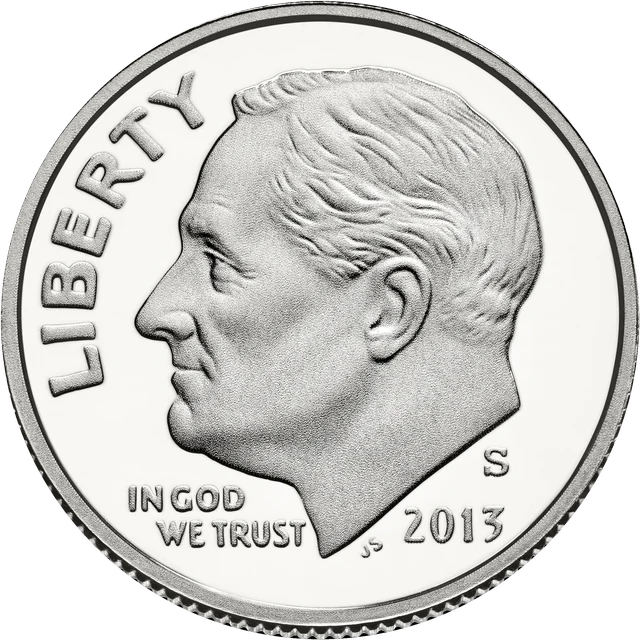
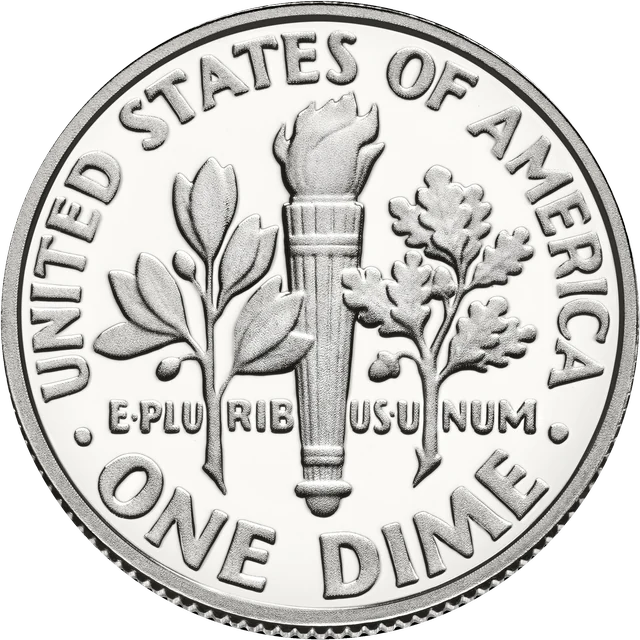
Shown: a 2013-S proof Roosevelt dime; the design is the same. Photos: United States Mint, Public domain, via Wikimedia Commons (front, back).
Varieties and errors to check
No major varieties are listed for 1967 dimes. Minor errors and die varieties interest specialists, but for ordinary coins condition and mint mark set the value.
Find the mint mark
No 1967 dime has a mint mark: the Mint used none from 1965 to 1967.
What it's made of
Copper-nickel clad (outer layers 75% copper, 25% nickel over a pure copper core), 2.268 grams
Mintage
How many were made
Coin
Type
Mintage
1967 (no mint mark)
For circulation
2,244,007,320
Questions
Is a 1967 dime silver?
No. 1967 dimes are made of copper-nickel clad (outer layers 75% copper, 25% nickel over a pure copper core).
Which 1967 dime is worth the most?
All 1967 dimes made for circulation are valued alike: about $9 in MS65.
Where is the mint mark on a 1967 dime?
No 1967 dime has a mint mark: the Mint used none from 1965 to 1967.
As an Amazon Associate I earn from qualifying purchases. As an eBay Partner Network affiliate, we may also earn a commission when you buy through links on this site, at no extra cost to you. Affiliate disclosure.
 CoinYearValue