CoinYearValue
1973: the lowest circulation mintage of the 1965 to 1976 halves
Philadelphia's 64,964,000 halves in 1973 are the lowest mintage of any Kennedy struck for circulation from 1965 through 1976, according to PCGS, edging below even the 1965. The 2,150,000 1970-D halves were fewer, but those went only into mint sets. It came just two years after Denver's record 302 million. That still left plenty to go around: PCGS estimates about 13 million survive in all grades.
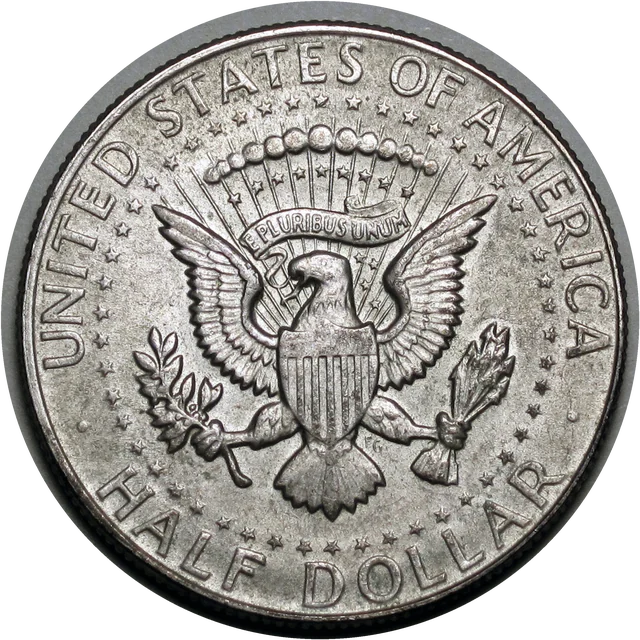
Change was already coming for the reverse. On March 5, 1973, the Mint announced it would seek new Bicentennial designs for the half and the dollar, and Public Law 93-127, which President Nixon signed on October 18, 1973, provided for those new reverses and for silver-clad collector versions. Those laws meant the eagle reverse had only one more date ahead of it.
Well-struck Philadelphia coins are easy through about MS65, but MS66 is harder and MS67 very hard to find. The PCGS census shows ten coins tied at MS67, and anything above that is considered rare. The PCGS estimate for MS65 and finer is about 130,000 for Philadelphia against about 333,000 for Denver, so the lower mintage does show up in high grades. Denver's 83,171,400 coins include a lesser doubled die obverse, catalogued as FS-101. In the proof set, 1973 was the first year to include the Eisenhower dollar, which raised the set's face value from $0.91 to $1.91. Sales fell to 2,760,339, half a million fewer than the 1972 set.
What to check on this one
- The no-mint-mark 1973 is the lower mintage of the two circulation coins; confirm the absence of a D under the bust before you assume which you have.
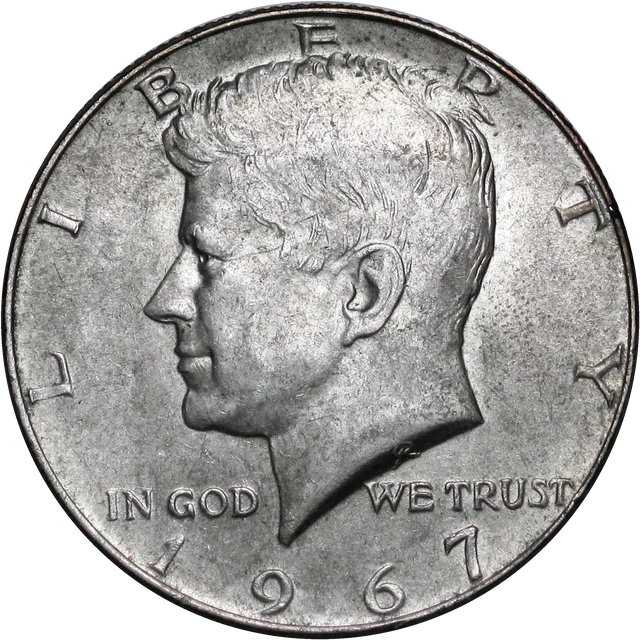
- On a 1973-D, check IN GOD WE TRUST and LIBERTY for doubling (FS-101).
- Coins graded above MS67 are rare for the Philadelphia issue, so check the holder and certification number on any that are offered.
Sources: 1973 50C, PCGS CoinFacts #6720; 1973-D 50C, PCGS CoinFacts #6721; Kennedy half dollar (Wikipedia); United States Proof Set (Wikipedia); 1969-D Kennedy Half Dollar (CoinWeek).