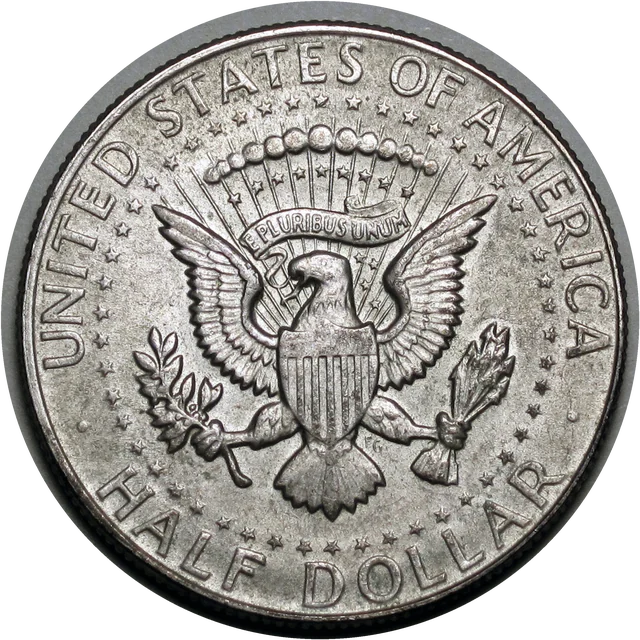
CoinYearValue
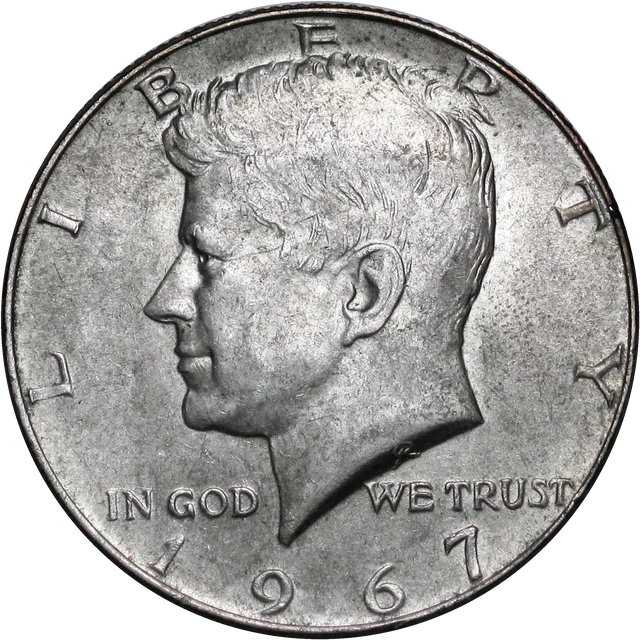
1974: the date the Mint kept striking well into 1975
No half dollar is dated 1975, but 1974-dated halves were still being made that year. While the first Bicentennial coins came off the presses in 1975, the Mint kept producing 1974-dated pieces alongside them, as late as September 1975. Philadelphia's total for the date reached 201,596,000, more than double Denver's and, among clad halves of 1971 through 1974, second only to the 1971-D.
The replacement reverse was settled during 1974. Seth G. Huntington's view of Independence Hall was named the winning half dollar design on March 6, 1974, leaving the 1974 as the last eagle-reverse date before the dual-dated coins. Prototype silver proofs of the new designs, with no mint mark, were struck at the Philadelphia Mint on August 12, 1974, months before regular production.
The Denver coin carries the year's notable variety. Jaime Hernandez of PCGS singles out the 1974-D doubled die obverse (FS-101) as a major variety, with the doubling easiest to see on IN GOD WE TRUST. For the Philadelphia coin, he says it becomes scarce only at MS66 and above, with several dozen confirmed in MS67 and anything finer very rare. PCGS estimates about 806,000 survive at MS65 or better. The 1974-S proof set, 2,612,568 sold, was the last with the regular eagle half; the 1975 set carried the Bicentennial design instead.
What to check on this one
- On a 1974-D, look at TRUST first; clear doubling there is the sign of the FS-101 doubled die obverse.
- Make sure the D is present below the bust, since the major doubled die listing is for the Denver coin.
- Halves struck in 1975 read either 1974 or 1776-1976, so a coin showing a 1975 date has been altered.
Sources: USA Coin Album: Two Hundred Years in the Making (NGC); 1974 50C, PCGS CoinFacts #6722; 1974-D 50C Doubled Die Obverse, PCGS CoinFacts #96723; Kennedy half dollar (Wikipedia); 40 Years Since U.S. Bicentennial Coins First Hit Pocket Change (CoinWeek).