Certified MS65$9Near flawless, graded by PCGS or NGC
A worn 1990 penny is worth its face value, 1¢.
Uncirculated ones bring 5–10¢, and a certified MS65 brings $9.
An ordinary one is worth one cent. Check it closely for the varieties below before spending it.
Advertisement
The proof cents that left San Francisco without an S
A die made for ordinary cents ended up in the wrong place. Numismatic News reports the Mint's explanation this way: a worker processed a business-strike working die, one that would never carry a mint mark, as though it were a proof die. It was shipped to San Francisco and went into use before anyone noticed. By the mid-1980s the S was part of each year's master die for proofs, so proof dies were no longer marked one at a time.
The coins reached collectors only inside the 1990 Proof Set and the 1990 Prestige Proof Set. Estimates based on the die's expected life put the number struck at about 3,500, though far fewer have turned up. One reader told Numismatic News he checked ten sets he had bought from the Mint in 1990 and never opened, and five held a cent with no S. The Mint found and destroyed 145 of them. A PCGS Price Guide editor puts the survivors at fewer than 200, though PCGS has certified 236 and NGC 100, counts inflated by resubmissions. A Deep Cameo PCGS PR69 holds the auction record at $20,700, paid at Bowers & Merena on August 4, 2007.
Philadelphia put no mint mark on cents, so a blank space below the date on a coin from pocket change is ordinary. The real coin is a proof, with mirror fields, frosted devices and sharp, squared rims, and it would have come out of a sealed set. CoinValueChecker warns that counterfeits exist, usually Philadelphia cents with polished surfaces made to imitate proof fields.
What to check on this one
Tilt the coin under one lamp. Proof fields look like dark glass and Lincoln's portrait looks frosted and raised. A satin, even surface means a circulation strike.
Check the rims. They should be sharp and squared, where a Philadelphia business strike has a rounded edge.
Be wary of a Philadelphia cent with polished, mirror-like fields. Altered business strikes are the usual fake, so send any suspected No S to a grading service before buying or selling.
What each 1990 penny is worth, by grade and mint mark
Grade
No mark
D
GoodGoodG4Heavily worn; date and letters still readable
1¢
1¢
FineFineF12Worn, but all the main lettering is clear
1¢
1¢
Very FineV. FineVF20Light to moderate wear on the high spots
1¢
1¢
Extremely FineEx. FineEF40Light wear on the highest spots only
1¢
1¢
About UncirculatedAbout Unc.AU50Traces of wear, some original shine
2¢
2¢
UncirculatedUnc.MS60No wear, but plenty of marks
5¢
5¢
Choice UncirculatedChoice Unc.MS63No wear and only a few marks
10¢
10¢
Gem UncirculatedGem Unc.MS65Certified and nearly flawless
$9
$9
Good through About Uncirculated are for coins as found, not in a grading holder. MS60 and MS63 are uncirculated coins; MS65 is a coin certified by PCGS or NGC. For cents, MS60 and MS63 values are for brown coins, and red ones bring more. MS65 values are for coins with full original red color; brown and red-brown ones sell for less. Values checked November 15, 2026 against public price guides and auction records. How values work.
What a 1990 penny looks like
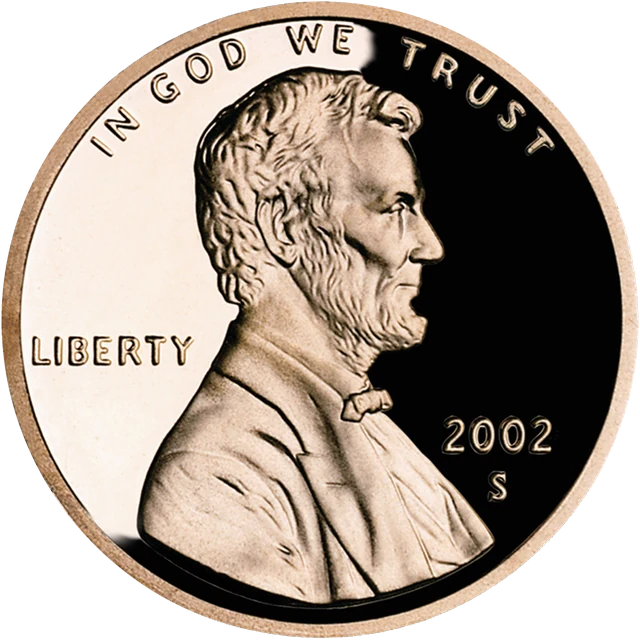
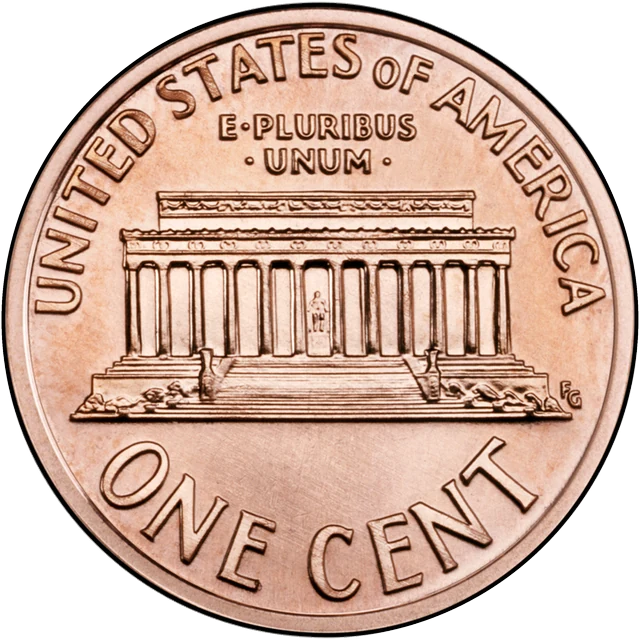
FrontBack
Shown: the front of a 2002-S proof cent and the back of a 2005-D cent. The design is the same, except that on cents made for circulation through 1992 the A and M of AMERICA stand farther apart. Photos: United States Mint, Public domain, via Wikimedia Commons (front, back).
Varieties and errors to check
1990 proof with no S
Look for: A proof cent, with mirror fields and frosted design, that has no S mint mark below the date.
San Francisco used a proof die that was missing its S, so a small number of 1990 proofs have no mint mark. A plain Philadelphia cent with no mark is not this coin; it has satin luster and rounded rims.
Melting cents and nickels is not allowed under U.S. Mint rules, so copper and nickel value is a guide only.
Mintage
How many were made
Coin
Type
Mintage
1990 (no mint mark)
For circulation
6,851,765,000
1990-D
For circulation
4,922,894,533
1990-S
Proof (collector)
3,296,504
1990 (no mint mark, made in San Francisco)
Proof (collector)
About 3,500 (estimate)
Questions
Is a 1990 penny silver?
No. 1990 pennies are made of copper-plated zinc (97.5% zinc, 2.5% copper).
Which 1990 penny is worth the most?
In MS65, the 1990 (no mint mark) and 1990-D are worth the most, about $9 each. The 1990 proof with no S is the one to look for: typical examples sell for $1,900–3,500.
Where is the mint mark on a 1990 penny?
Front of the coin, just below the date. Philadelphia cents have no letter.
As an Amazon Associate I earn from qualifying purchases. As an eBay Partner Network affiliate, we may also earn a commission when you buy through links on this site, at no extra cost to you. Affiliate disclosure.
 CoinYearValue