Certified MS65$195Near flawless, graded by PCGS or NGC
Values for the 1896 silver dollar with no mint mark. Other mint marks are in the table below.
A worn 1896 silver dollar with no mint mark sells for about $41–43: its silver value plus a small collector premium.
Uncirculated, that coin brings $70–94, and a certified MS65 brings $195. In worn condition, the 1896-S is worth the most: about $57–165.
A worn one with no mint mark is worth its silver: a coin dealer or bullion buyer will pay close to melt value. Uncirculated coins bring more; see the table. Check the mint mark before you sell.
Advertisement
Dollars return in bulk after the 1890s slump
Silver dollar coinage nearly stopped after the Sherman Act's monthly requirement ended and Congress repealed the act on November 1, 1893. San Francisco made only 100,000 in 1893, and the only 1895 Philadelphia dollars known today are 880 Proofs. In 1896 the three mints together turned out about 19.9 million.
Philadelphia's share became the most common Morgan dollar of the 1890s, in Bowers's view. The Treasury released many hundreds of bags of Mint State 1896 dollars in the 1950s and from 1962 to 1964, probably well over a million coins, and John B. Love handled 16 or 17 more bags from the Redfield estate. PCGS puts the number at MS65 or finer near 15,000.
The two branch mints had far worse luck. The 1896-O is nearly always flatly struck with average to poor luster, and many lightly worn sliders get sold as uncirculated. PCGS estimates about 490,000 survive in all grades but only 8 at MS65 or better; an MS66 brought $528,000 at Stack's Bowers on November 18, 2020. One bag was reportedly stolen from LaVere Redfield in a 1963 burglary. The 1896-S became scarce through the melting pot instead. Probably 2 to 3 million were melted under the Pittman Act, and the survivors are mostly worn. VG through VF pieces are common, EF is elusive and AU is seldom seen. Rolls were already hard to find in the 1960s; Harry J. Forman advertised a 20-coin roll for $2,700 in May 1965. At the same November 2020 sale, an MS69 1896-S sold for $720,000.
What to check on this one
On an 1896-O offered as uncirculated, tilt it and watch for dull patches on the high points of the portrait and the eagle; sliders are far more common than true Mint State coins.
Grade matters a lot on a worn 1896-S. EF and AU pieces are much scarcer than VG to VF ones, so check the hair above Liberty's ear and the eagle's breast feathers.
A Philadelphia 1896 in uncirculated condition is common; the premium only shows up at gem grades.
What each 1896 silver dollar is worth, by grade and mint mark
Grade
No mark
S
O
GoodGoodG4Heavily worn; date and letters still readable
$41
$57
$57
FineFineF12Worn, but all the main lettering is clear
$41
$57
$61
Very FineV. FineVF20Light to moderate wear on the high spots
$43
$165
$72
Extremely FineEx. FineEF40Light wear on the highest spots only
$44
$435
$86
About UncirculatedAbout Unc.AU50Traces of wear, some original shine
$56
$1,350
$170
UncirculatedUnc.MS60No wear, but plenty of marks
$70
$2,800
$1,900
Choice UncirculatedChoice Unc.MS63No wear and only a few marks
$94
$4,300
$6,450
Gem UncirculatedGem Unc.MS65Certified and nearly flawless
$195
$9,950
$134,000
Good through About Uncirculated are for coins as found, not in a grading holder. MS60 and MS63 are uncirculated coins; MS65 is a coin certified by PCGS or NGC. No value drops below the silver in the coin, and those cells follow the live silver price. Values checked November 15, 2026 against public price guides and auction records. How values work.
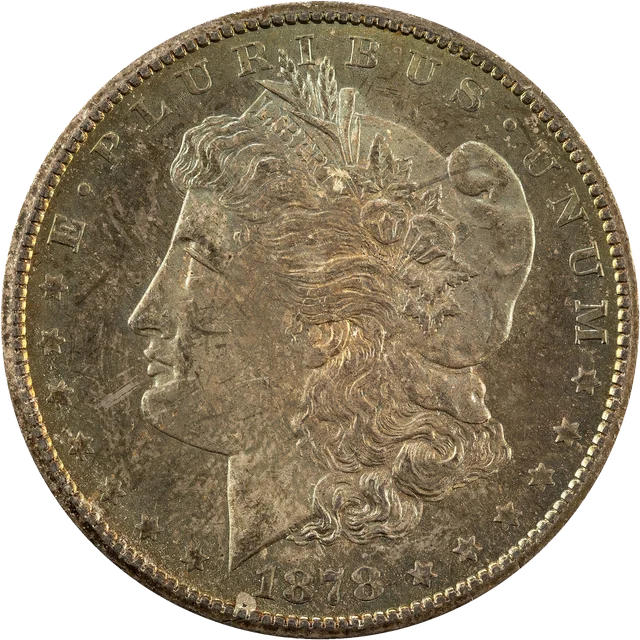
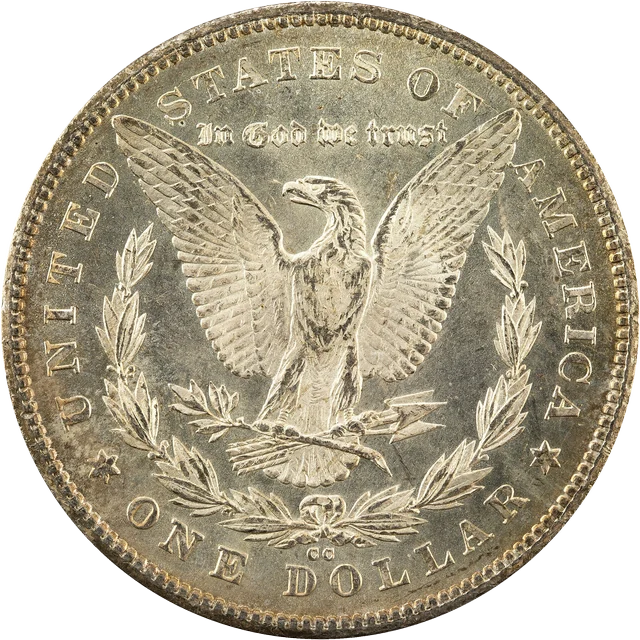
What an 1896 silver dollar looks like
FrontBack
Shown: an 1878-CC Morgan dollar, the same design. Photos: National Numismatic Collection, National Museum of American History (photo by Jaclyn Nash), Public domain, via Wikimedia Commons.
Varieties and errors to check
No major varieties are listed for 1896 silver dollars. Minor errors and die varieties interest specialists, but for ordinary coins condition and mint mark set the value.
Find the mint mark
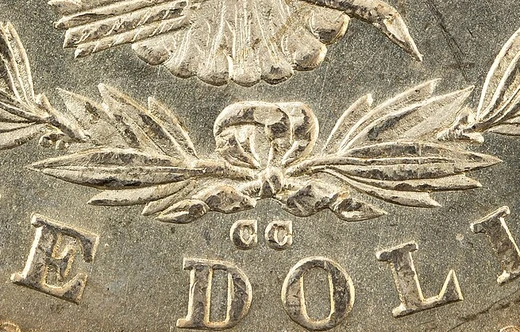
On Morgan dollars the mint mark sits on the back, below the wreath and above the DO in DOLLAR. This 1878 coin shows CC. Photo: National Numismatic Collection, National Museum of American History (photo by Jaclyn Nash), Public domain, via Wikimedia Commons.
Back of the coin, below the wreath, above the letters DO in DOLLAR. Philadelphia coins have no letter. CC is Carson City, O is New Orleans, S is San Francisco and D is Denver (1921 only).
What it's made of
90% silver, 10% copper, 26.73 grams, 0.77344 troy oz of silver, worth $36.62 today
Condition matters
Most Morgan dollars are common; value comes from the mint mark, the year and how much wear the coin has. Carson City (CC) coins sell for more across the board.
Mintage
How many were made
Coin
Type
Mintage
1896-O
For circulation
4,900,000
1896 (no mint mark)
For circulation
9,976,000
1896-S
For circulation
5,000,000
Questions
Is an 1896 silver dollar silver?
Yes. Every 1896 silver dollar made for circulation contains 0.77344 troy ounces of silver. Its silver value moves with the silver price; the live figure is shown at the top of this page.
Which 1896 silver dollar is worth the most?
In MS65, the 1896-O is worth the most, about $134,000. In worn condition, the 1896-S is worth the most, about $57–165.
Where is the mint mark on an 1896 silver dollar?
Back of the coin, below the wreath, above the letters DO in DOLLAR. Philadelphia coins have no letter. CC is Carson City, O is New Orleans, S is San Francisco and D is Denver (1921 only).
As an Amazon Associate I earn from qualifying purchases. As an eBay Partner Network affiliate, we may also earn a commission when you buy through links on this site, at no extra cost to you. Affiliate disclosure.
 CoinYearValue