CoinYearValue
The 1914/(3) date variety and a hard-to-find 1914-D
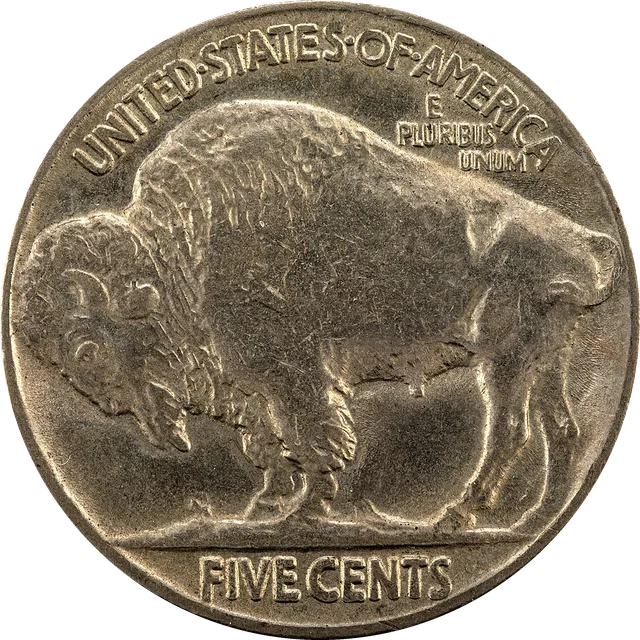
1914 was the first full year for the revised Type 2 design, with FIVE CENTS enlarged and the bison standing on flat ground instead of a mound. The change was meant to keep the denomination from wearing away, but numismatic historian David Lange's research in the National Archives found that it actually shortened die life.
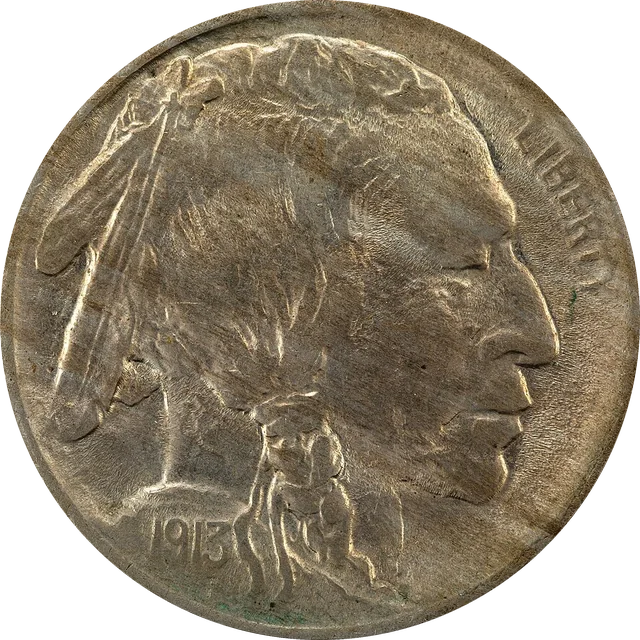
The most sought-after coin of the year is the 1914/(3) from Philadelphia, which shows a trace of an earlier digit, possibly a 3, around the top of the final 4. One proposed explanation is the reuse of an older dated master die, and specialists still debate whether it is a true overdate, which is why the 3 sits in parentheses. Three or possibly four working dies have been identified, and strong examples show a clear bulbous curve at the top of the 4. Fewer than 500 strong circulated coins are believed to exist, and a toned MS66 CAC set the record at $84,375 at GreatCollections in February 2021.
Denver struck only 3,912,000, and most went straight into heavy circulation, which makes the 1914-D a semi-key; an MS67 holds its record at $32,775. San Francisco's 3,470,000 coins are easier to find worn but scarcer in gem, and strike is the main problem: a 1914-S in MS64 can look noticeably weaker on the horn and braid than a Philadelphia coin in the same grade.
Philadelphia struck 20,665,738, yet survivors are only slightly more common than the 1914-S. Its strikes are consistent, and fully detailed horns and fur are not unusual on Mint State pieces. An MS67+ brought $30,550 at Legend Rare Coin Auctions in December 2022.
What to check on this one
- For the 1914/(3), look at the top of the final 4 under magnification for a rounded, bulbous curve; weak examples need careful study and a second opinion.
- On a worn 1914-D, confirm the D below FIVE CENTS and the full date before paying a semi-key price.
- Compare a 1914-S with a Philadelphia coin in the same grade; if its horn and braid look just as sharp, it deserves a premium.
Sources: Buffalo nickel (Wikipedia); 1914 nickel value (CoinValueChecker).