CoinYearValue
A key 1915-S, a well-struck 1915-D, and one of the scarcest proof years
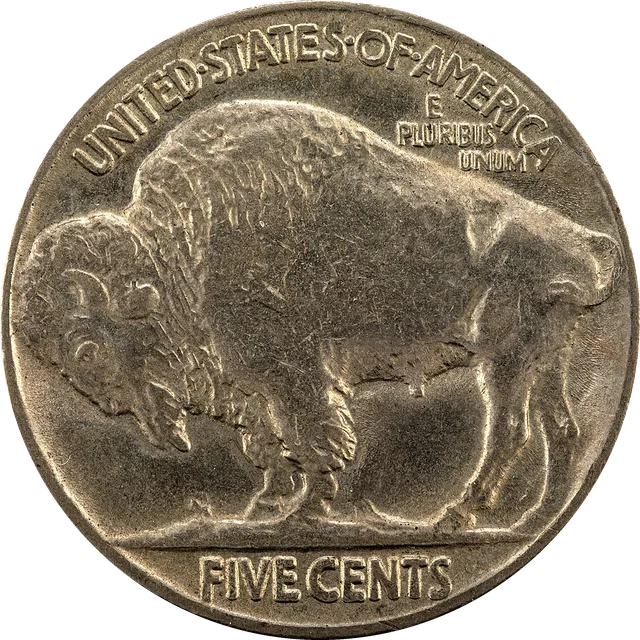
Only 1,505,000 nickels came from San Francisco in 1915, a total that only a handful of Buffalo nickel issues fall below, and the 1915-S is a recognized key date of the series. Strike quality varies widely, and sharper pieces consistently bring more at auction. The Mint thickened the date numerals gradually over these years, but many worn Buffalo nickels still lost their dates, and a 1915-S earns its premium only when the date and the S both show. A notable sale was $55,813 for an MS67 at Legend Rare Coin Auctions in December 2019.
Denver made 7,569,500. Most 1915-D nickels are well struck, with luster that ranges from satiny to frosty, yet in MS64 or better the 1915-D is rarer than both the 1914-D and the 1916-D. Its auction record is $20,125 for an MS67 at Heritage in 2007.
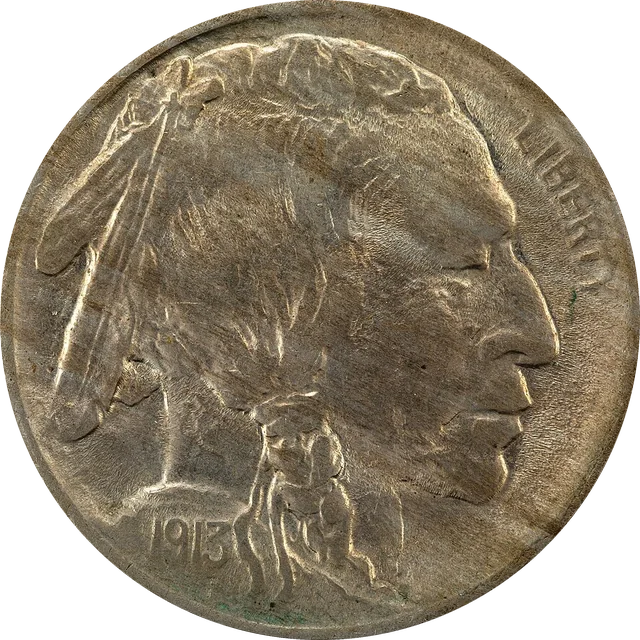
Philadelphia's 20,987,270 coins are the easiest 1915 to find, but in uncirculated grades they are noticeably scarcer than later Philadelphia Buffalo nickels; a clean MS67+ sold for $9,600 at Heritage. The best ones show a full horn and complete separation in the hair braids. A 1915 doubled die obverse, FS-101, is also known, with its extra outlines around the nostril, eyelid and lips rather than in the date.
Only 1,050 proof nickels were struck in 1915, making it the second scarcest proof year of the series after 1916. They have a matte finish, most survivors grade PR65 or PR66, anything above PR67 is genuinely rare, and a PR69 holds the record at $69,000.
What to check on this one
- On a 1915-S, judge the strike as well as the wear; a sharp coin consistently outsells a soft one in the same grade.
- For the FS-101 doubled die, look at the nostril, eyelid and lips under magnification; a thick-looking date by itself is not the variety.
- A 1915 nickel with an unusual matte finish and very sharp detail may be one of the 1,050 proofs, which are priced separately; have it checked before treating it as a regular coin.
Sources: 1915 nickel value (CoinValueChecker); Buffalo nickel (Wikipedia).