CoinYearValue
A slump year with two mints and two very different strikes
With the economy in a slump, the need for new coins fell, and only two mints made dimes in 1921: Philadelphia struck 1,230,000 and Denver 1,080,000. San Francisco made none, and the following year no dimes were struck anywhere. Both 1921 dimes are among the scarcer dates of the series, even worn.
The two coins were struck very differently. Philadelphia increased die spacing to make its dies last longer, and many of its dimes left the mint with soft lettering, mushy rims and weak center bands. A coin can look nice overall and still be marked down for weak edges, and a 1921 Philadelphia dime with Full Bands is exceptionally valuable. Altered dates and artificially split bands both turn up, so a high-grade coin needs careful authentication.
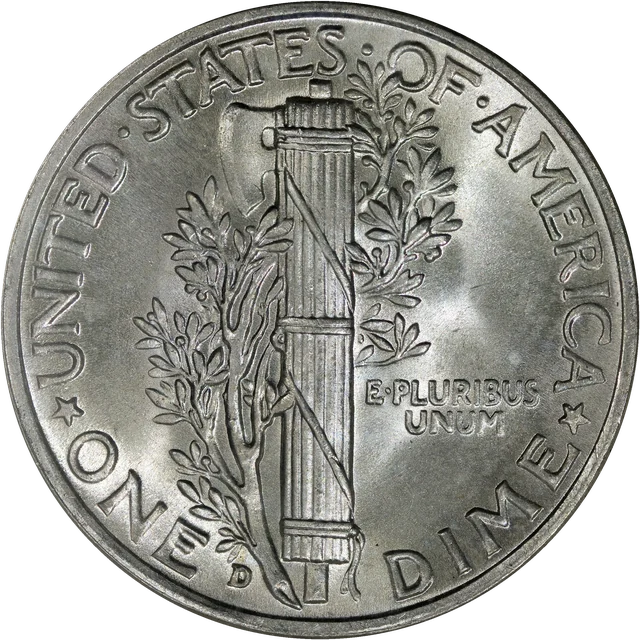
Denver, the only branch mint making dimes in 1921, usually delivered a stronger strike. About two thirds of certified Mint State 1921-D dimes qualify as Full Bands, a high share for a key date. Die cracks are common on this issue, caused by improper die hardening or collar machining rather than worn dies, and dramatic ones add interest on high-grade coins. An MS67+ sold for $23,500 at Legend Rare Coin Auctions in February 2021.
Repunched mint marks exist as well, with a second D visible above, below or at an angle to the main one; on a date this scarce, a clearly attributed repunched D on a Mint State coin draws extra attention.
What to check on this one
- On a 1921 Philadelphia dime, check the lettering and rims as well as the bands; edge weakness from the wide die spacing is common and lowers the grade.
- Have any high-grade 1921 authenticated; altered dates and artificially split bands are both known.
- On a 1921-D, a raised line across the front is usually a die crack, common on this issue; on a high-grade coin a dramatic crack can add interest.
Sources: Mercury dime (Wikipedia); 1921 Mercury dime value (CoinValueChecker).