CoinYearValue
No Denver dimes, a poorly struck 1923-S, and the fake 1923-D
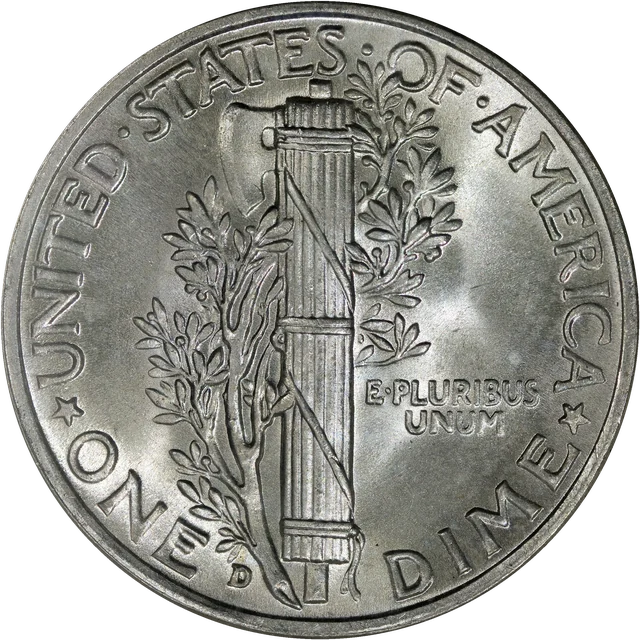
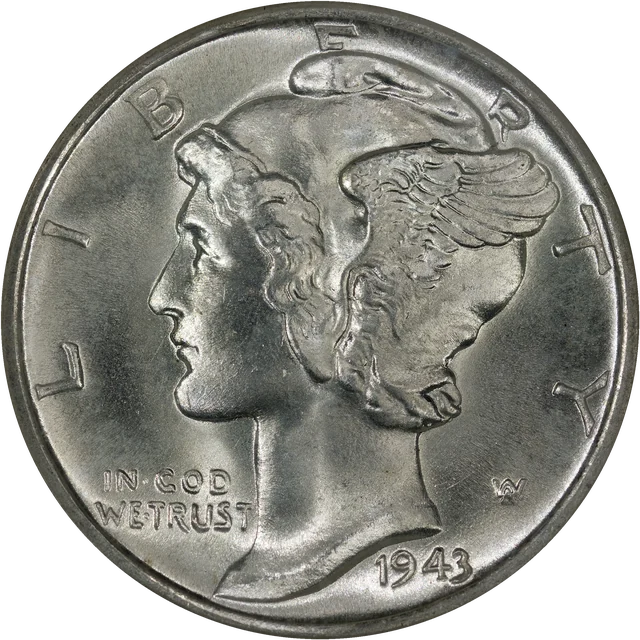
Only Philadelphia and San Francisco made dimes in 1923, the last year of the early-1920s slowdown. Denver struck none, yet dimes dated 1923-D do turn up. They are counterfeits struck in good silver, so the maker profited on the gap between production cost and face value. They did not appear until after World War II, are always found worn, and are believed to have been made in the Soviet Union, which is known to have counterfeited U.S. coins during the war.
San Francisco's 6,440,000 dimes show up regularly in circulated grades. The difficulty is an uncirculated coin with a decent strike, because San Francisco's work in 1923 was poor and most survivors cannot earn Full Bands even if they never circulated. The top sale is $105,750 for an MS66 FB at Legend Rare Coin Auctions in September 2018, while an MS67 without Full Bands brought $4,313 in 2011.
Philadelphia struck 50,130,000, the workhorse of the year, and worn ones are inexpensive. Above MS66 the population drops fast, and the Full Bands premium is huge: the record for an ordinary example is $1,087 for an MS67 at Legend in May 2023, against $47,000 for an MS68+ FB at Legend in March 2019.
The 1923 dime has no named die varieties or overdates, only production errors such as off-center strikes, laminations and broadstrikes.
What to check on this one
- A 1923 dime with a D on the reverse is a counterfeit; Denver made no dimes that year.
- On a 1923-S, judge the bands under a loupe; many coins that look uncirculated to the eye still lack Full Bands.
- On an off-center 1923, make sure the full date is readable; a large shift with 1923 intact is worth far more than one with the date clipped.
Sources: Mercury dime (Wikipedia); 1923 Mercury dime value (CoinValueChecker).