CoinYearValue
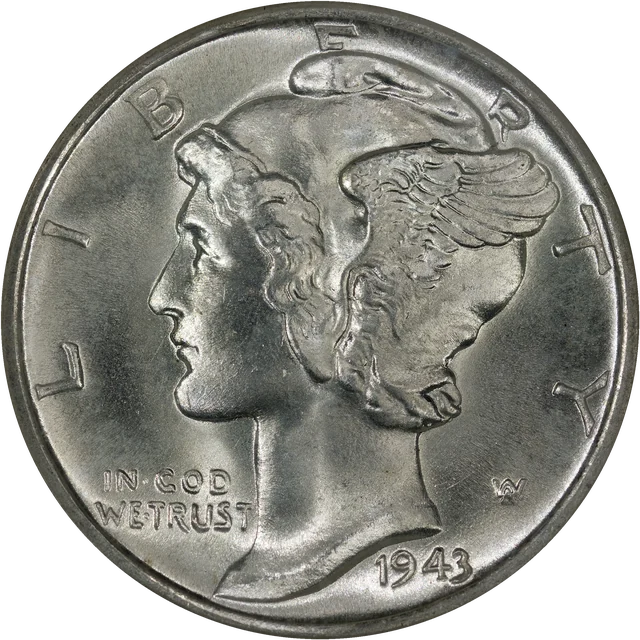
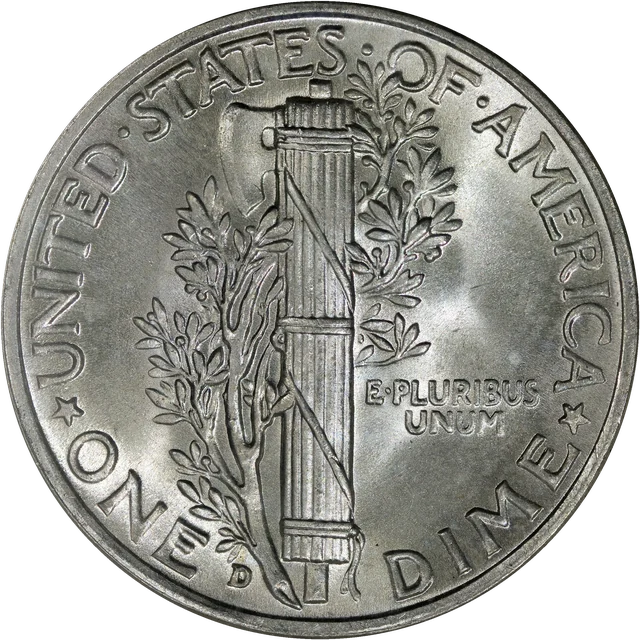
A scarce 1925-D and a 1925-S struck from worn, eroded dies
All three 1925 dimes have strike problems, which is unusual. Philadelphia's 25,610,000 coins came out with weak to average strikes, odd for the main mint. Worn ones are easy to find and cheap, but sharp coins with fully split bands and strong luster are another matter, and an MS68 Full Bands has sold for more than $45,000.
Denver struck 5,117,000, the lowest of the three, and the 1925-D has the lowest survival in every grade. Values climb steeply in Mint State. Most 1925-D dimes show incomplete bands, and Full Bands examples are exceptionally rare, which makes this one of the most demanding Mercury dimes to find sharply struck and problem-free.
San Francisco's 5,850,000 dimes are widely called the most poorly produced of the whole series. They were struck from severely worn, eroded dies, so most coins looked soft and mushy straight from the press. Circulated pieces are easy to find; coins in MS65 or better are rare, and Full Bands pieces rarer still, especially above MS65. A top example has brought $74,750.
No named varieties are known for 1925, but genuine errors turn up. An off-center strike needs a full, readable date to bring a strong price, with the sweet spot around 20 to 50 percent off center, and a lamination running across Liberty's face or the date is worth far more than a small rim flake.
What to check on this one
- On a 1925-S, don't grade by eye alone; soft, mushy detail is normal for this date, and a sharp coin is the rarity.
- Check a 1925-D for a clear D and an original, problem-free surface before paying a premium; it is scarce in every grade.
- A peeling flap or a rough, striated pit is a lamination; its size and placement, not just its presence, decide whether it adds value.
Sources: 1925 Mercury dime value (CoinValueChecker); Mercury dime (Wikipedia).