CoinYearValue
A 1926-S with one of the series' smallest mintages, and a $60,000 Full Bands 1926-D
The 1926-S comes from a San Francisco run of only 1,520,000 dimes, one of the smallest mintages of the Mercury series, and it carries a premium in every grade. Circulated pieces exist, but uncirculated coins are genuinely scarce, and perhaps 100 to 200 survive in MS65 or better, with or without Full Bands. The auction record is $54,625 for a PCGS MS67 CAC at Heritage in August 2010.
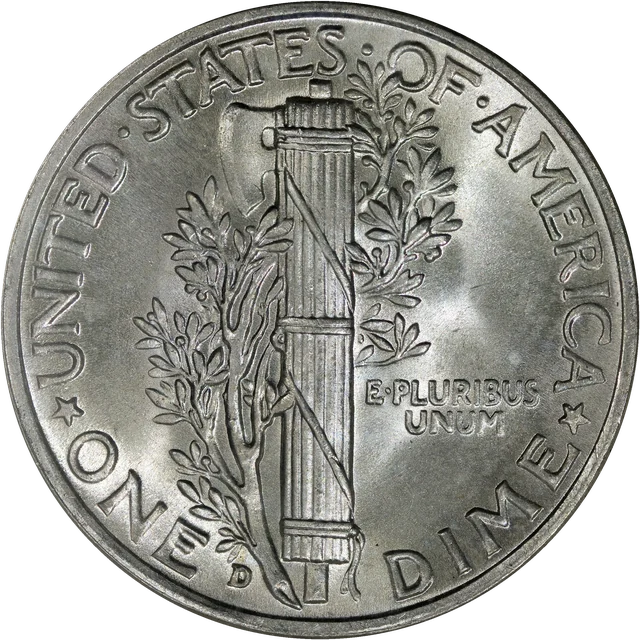
Denver made 6,828,000, and its dies struggled to deliver a sharp strike that year. Below MS65, Full Bands 1926-D dimes are fairly available; above it they all but vanish. A standard MS67 is a few-thousand-dollar coin, while a PCGS MS67 Full Bands sold for $60,000 at Heritage in January 2019, a premium of more than 1,300% for the same grade.
Philadelphia struck 32,160,000 and did a decent job, so Full Bands coins are easier to find than from Denver or San Francisco. The market tightens above MS65, and the record is $9,200 for a PCGS MS67 CAC at Heritage.
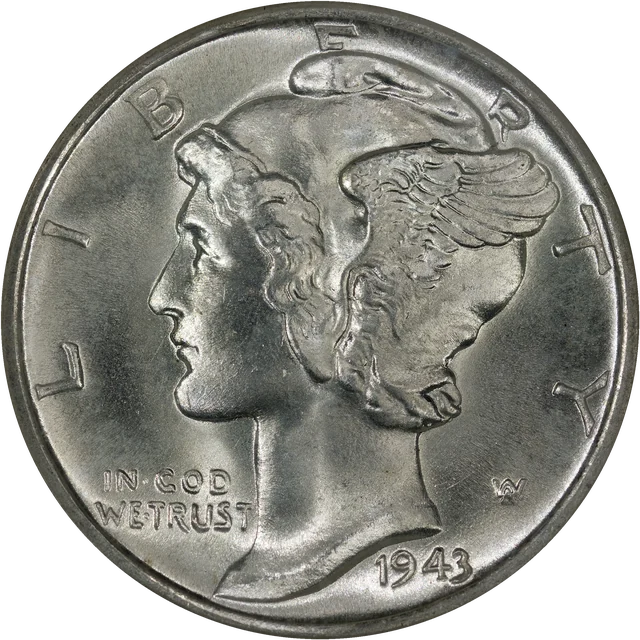
A doubled die obverse, FS-101, was first reported after it turned up at a major coin show where none of the CONECA representatives had heard of it; CONECA now lists it as DDO-001. The doubling shows on ERTY in LIBERTY, on the AW monogram of designer Adolph Weinman and on the wing feathers of Liberty's cap.
What to check on this one
- Look at ERTY, the AW monogram and the cap's wing feathers under a loupe; those are the places the 1926 doubled die shows.
- On a 1926-D in MS65 or better, the bands decide the price; check them under magnification before anything else.
- A 1926-S in any grade deserves a close look at the S and the date, since it is the expensive coin of the year.
Sources: 1926 Mercury dime value (CoinValueChecker); Mercury dime (Wikipedia).