CoinYearValue
The 1925-D has the smallest mintage, but the 1925-S is harder in gem condition
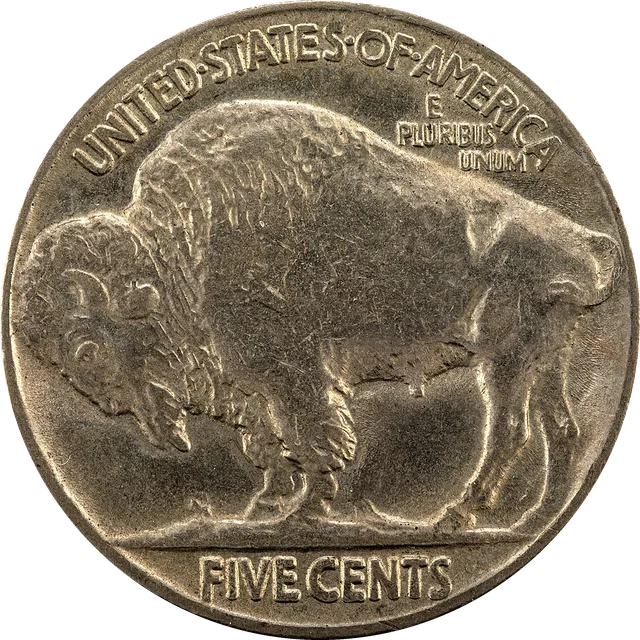
Denver struck just 4,450,000 nickels in 1925, the smallest total of the three mints, and the 1925-D is very scarce in circulated grades and rare in Mint State. As with most Denver and San Francisco nickels of the 1920s, the strike is often soft: many survivors have a weak horn and a mushy braid, so a sharply struck coin carries a real premium. The auction record is $57,500 for an NGC MS66 at Heritage in August 2007.
San Francisco made more, 6,256,000, yet the 1925-S is the harder coin in top condition. Very few survive in high grades, and among regular issues it is ranked the third rarest Buffalo nickel in gem condition. Its strike also tends to be soft. The all-time record for the 1925-S is $87,400, paid for an NGC MS66 at Bowers and Merena in August 2009.
Philadelphia's 35,565,100 coins account for most of the year's output and generally came off the press with stronger strikes than the branch-mint pieces. They are fairly common in circulated grades and somewhat scarce in Mint State, and an MS67 sold for $32,200 at Bowers and Merena in August 2006.
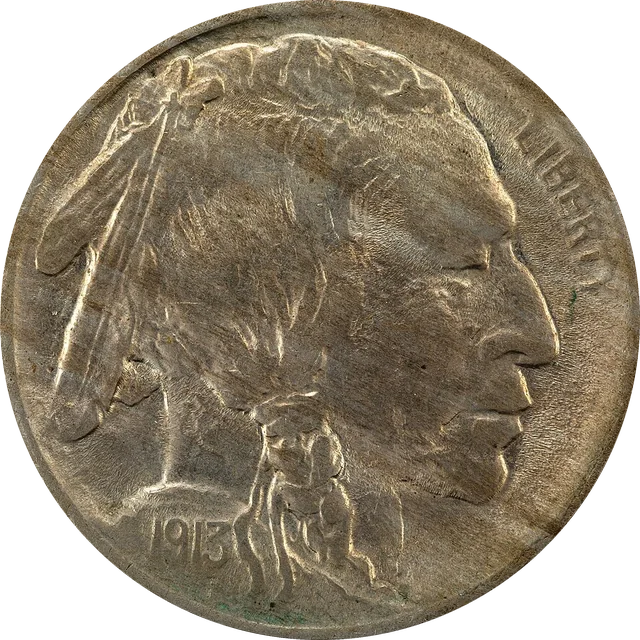
A small repeated outline along the left edge of the lower braid and ribbon shows up on 1925 nickels from all three mints. It came from the master die behind every working die that year, so it is a normal feature of the date and adds nothing to the price. Some 1925-S coins have an S with its upper opening filled in, which Wexler traces to a damaged letter punch.
What to check on this one
- Don't pay extra for doubling beside the lower braid; on a 1925 it comes from the master die and appears on coins from every mint.
- On a 1925-D or 1925-S, look at the horn and the braid; soft detail there is normal for the date, and a sharp strike is what earns the premium.
- If the S under FIVE CENTS looks filled at the top, compare it with photos of the damaged-punch S before treating it as a repunched mint mark.
Sources: 1925 nickel value (CoinValueChecker); Buffalo nickel (Wikipedia).