CoinYearValue
A well-struck 1937-D, a low-mintage 1937-S, and the second year of proofs
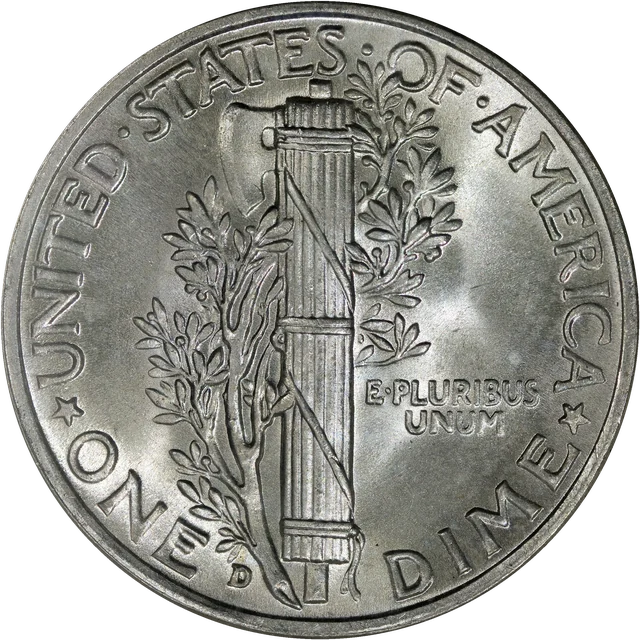
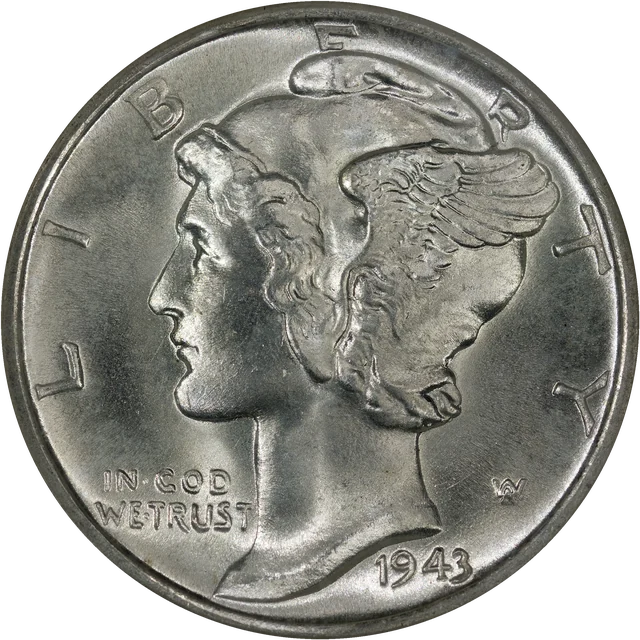
Denver had a reputation for mushy Mercury dime strikes, but the 1937-D is one of its better efforts. Many certified uncirculated examples show nice color, satiny luster and solid Full Bands, the separated bands that bind the bundle of rods on the reverse. A coin that combines a top grade with Full Bands is still rare: an MS68 FB set the record at $16,100, while an MS68 without Full Bands brings roughly $1,600.
At 9,740,000, the 1937-S has the lowest mintage of the three business strikes. It is still cheap in circulated grades, and San Francisco generally delivered a clean strike, but prices climb fast in gem condition. An MS68 FB brought $21,850 at Heritage, the highest price for any 1937 business strike. The 1937-S also has a listed doubled die obverse, FS-101, with doubling on the date and the obverse lettering; an MS67 FB sold for $1,500 at Stack's Bowers in August 2022.
Philadelphia's 56,860,000 coins are the most common 1937 dimes and sell for a modest premium over silver in circulated grades. Top-grade Full Bands examples are genuinely tough, and the record is $5,520 for an MS68+ FB at Heritage in June 2024.
Proofs for collectors numbered 5,756, all from Philadelphia. Most survivors grade PR60 to PR63 because of cloudy surfaces or bag marks from storage, only a handful reach PR68 or PR69, and true cameo contrast is extremely rare. A PR68+ holds the record at $26,400, the highest price for any 1937 dime.
What to check on this one
- On a 1937-S, check the date and lettering with a loupe for the FS-101 doubled die, and look at the bands as well, since Full Bands sets the price.
- Mirror fields on a 1937 dime point to one of the 5,756 proofs; cloudiness and marks are common on them and lower the grade.
- Don't sell a sharp 1937-D as a common coin; Denver struck this date well, and gem Full Bands pieces bring strong premiums.
Sources: 1937 Mercury dime value (CoinValueChecker); Mercury dime (Wikipedia).