CoinYearValue
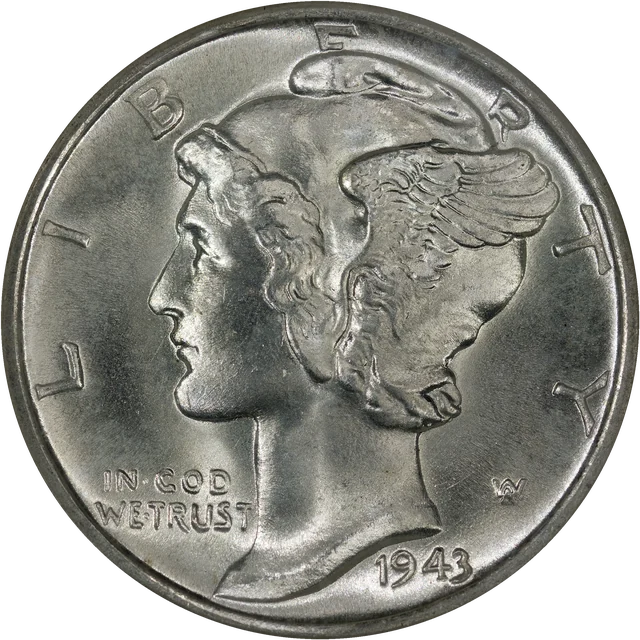
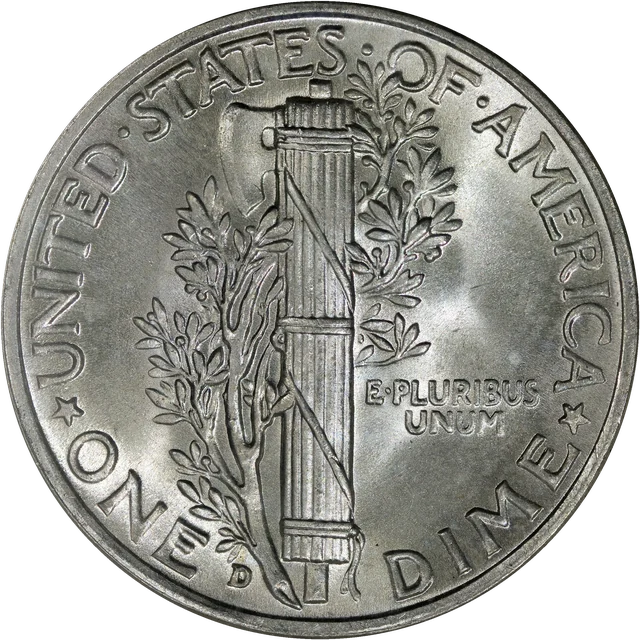
A scarce 1917-D that usually comes well struck
Denver's presses were tied up with quarters at the end of 1916, and dime striking there did not resume until well into 1917. The result was a mintage of 9,402,000, the lowest of the year, and the 1917-D is a semi-key in circulated grades, rare in Mint State and very rare as a gem. Oddly for a scarce date, it is also well made: Full Bands examples are slightly more common than coins without them. Mint State survivors tend to have frosty, strong luster, sometimes with attractive natural toning, and the record, $30,550, belongs to an MS67 FB sold at Heritage on August 2, 2017.
The 1917-S mintage of 27,330,000 is the highest for any S-mint Mercury dime before 1941, so worn ones are easy to find. Mint State coins are scarce and gems very scarce, though the strike is generally solid and Full Bands pieces turn up without much trouble.
Philadelphia's 55,230,000 led all Mercury dimes of 1916 to 1919. Even so, high-grade 1917 Philadelphia dimes are tougher than the mintage suggests, because more people saved the first-year 1916 coins. The record is $7,050 for an NGC MS67+ at Heritage on November 15, 2013.
Charles Barber, the Mint's chief engraver, died on February 18, 1917, after 37 years in office, and George Morgan, who had served under him the whole time, took over at 72. The nickname Mercury, which mistakes the winged Liberty for the Roman god, first appeared in a numismatic publication in January 1917.
What to check on this one
- On a 1917-D, check the center bands on the fasces; Full Bands coins are slightly more common than flat ones on this date, and they bring the strongest prices.
- Find the D or S on the reverse near the bottom; no letter means Philadelphia.
- Don't judge by mintage alone; a 1917 Philadelphia dime in high Mint State is harder to find than a 1916.
Sources: Mercury dime (Wikipedia); 1917 Mercury dime value (CoinValueChecker).